

Your Topics | Multiple Stories: The Content Strategy That Actually Works
Your topics | multiple stories is changing how creators connect with audiences. You’re not alone if you feel stuck creating content that barely gets noticed. Most creators make one piece per topic and wonder why engagement stays flat.
Here’s the truth: audiences are diverse. What resonates with one person falls flat with another. Different people need different angles to connect with the same information.
This article shows you exactly how to transform single topics into multiple compelling stories. You’ll learn practical strategies that boost engagement, improve SEO rankings, and help you reach more people without burning out.
What Is Your Topics | Multiple Stories?
Your topics | multiple stories means creating different narratives from one core subject.
Think of it like this: you have one topic, but many ways to tell it. Each story targets different audience segments with unique perspectives.
Let’s say your topic is “productivity.” You could create:
- A personal story about overcoming procrastination
- A step-by-step tutorial on time management
- An industry analysis of productivity tools
- A case study of successful remote teams
Each piece serves different readers. Some want inspiration. Others need practical tips. Many prefer data-driven insights.
This approach works because people consume content differently. Your busy professional might skim a listicle during lunch. Your detailed researcher wants comprehensive guides. Your visual learner prefers infographics.
One narrative can’t satisfy everyone. Multiple stories can.
Why Traditional Single-Story Content Falls Short
Most content creators write one article and move on. This limits your reach dramatically.
A single angle only connects with a small audience segment. You miss professionals who need case studies. You lose beginners who want simple explanations.
Plus, search engines reward comprehensive topic coverage. When you create multiple stories around one topic, you rank for more keywords naturally.
Single-story content also gets outdated quickly. Multiple stories let you update and expand without starting from scratch.
How Multiple Stories Boost Audience Engagement
Your topics | multiple stories increases engagement in measurable ways.
First, it captures different reader types. Some people connect through emotions. Others need logic and data. Multiple stories serve both groups.
Retention rates improve significantly. When readers find content matching their style, they stay longer. They explore related stories. They come back for more.
Community building happens naturally too. Different perspectives spark discussions. Readers with opposing views engage in comments. This activity signals quality to platforms and search engines.
Here’s a real example: A fitness blogger wrote about “weight loss” using multiple angles. She created a personal transformation story, a nutrition guide, and a workout comparison chart.
Her engagement jumped 230%. Why? Each story attracted different readers who then explored other pieces.
The Psychology Behind Multiple Narratives
Human brains process information through stories. But everyone has different story preferences.
Emotional thinkers connect with personal narratives. They want to feel understood. They respond to struggles and triumphs.
Analytical minds prefer data and frameworks. They need logical structures. They want proven systems.
Visual learners can’t engage with text-heavy content. They need graphics, charts, and videos.
Your topics | multiple stories addresses all these cognitive styles. You’re not forcing one approach on diverse minds.
Platform-Specific Story Adaptation Strategies
Different platforms demand different storytelling approaches.
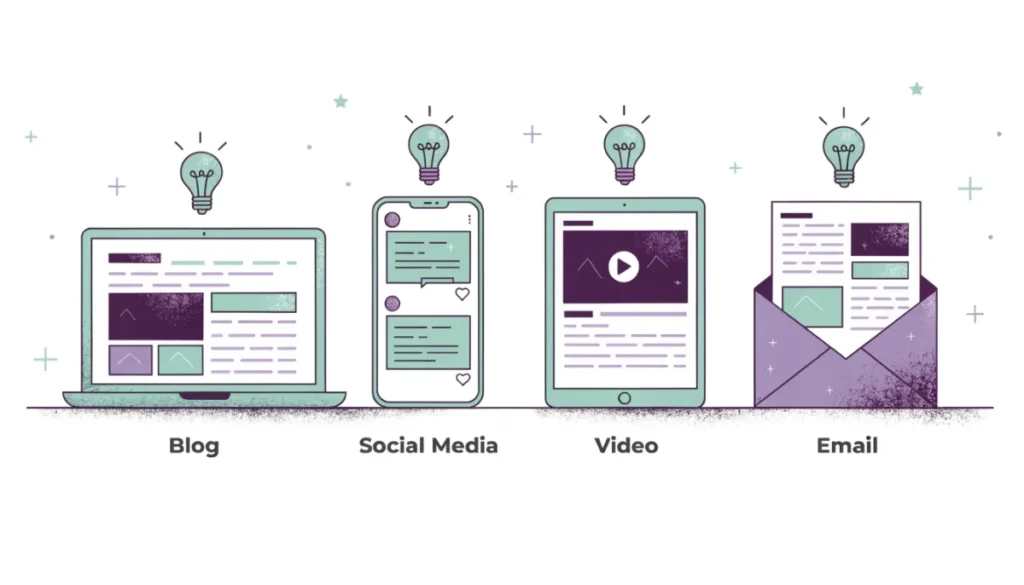
Instagram Stories need visual impact and brevity. Blog posts allow deeper exploration. Podcasts work for conversational, detailed content.
Here’s how to adapt one topic across platforms:
For Social Media:
- Break complex ideas into bite-sized posts
- Use strong visuals and minimal text
- Focus on one key takeaway per story
- Add interactive elements like polls
For Blog Content:
- Develop comprehensive, in-depth articles
- Include data, examples, and case studies
- Use subheadings for easy scanning
- Add internal links to related stories
For Video Platforms:
- Demonstrate concepts visually
- Keep energy high and pacing quick
- Show real examples and behind-the-scenes
- Use graphics to reinforce key points
For Email Marketing:
- Write conversationally and personally
- Focus on one specific angle
- Include clear action steps
- Link to deeper content on your site
Each platform has different audience expectations. Adapt your core topic to match those expectations.
Common Platform Mistakes to Avoid
Don’t copy-paste the same content everywhere. It won’t work.
Your long blog post won’t engage on Twitter. Break it into threads with specific hooks for each tweet.
Your Instagram carousel won’t work as a podcast script. Podcasts need conversational flow and verbal transitions.
Match your story format to platform strengths. Instagram showcases visuals. Blogs handle complexity. Audio creates intimacy.
Creating Multiple Story Angles From One Topic
Your topics | multiple stories starts with identifying different angles.
Take any topic and ask: What perspectives exist here? Who needs this information? What problems does it solve?
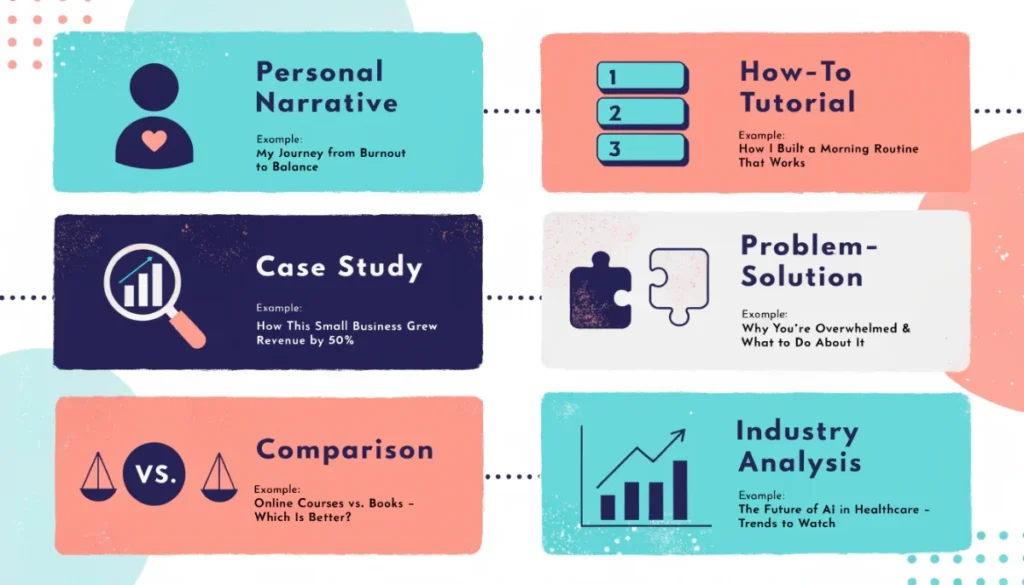
Six proven story angle types:
- Personal Narrative: Share your experience, failures, and lessons
- How-To Tutorial: Provide step-by-step instructions
- Case Study: Analyze real examples and results
- Problem-Solution: Identify issues and present fixes
- Comparison: Evaluate different approaches or tools
- Industry Analysis: Examine trends and expert opinions
Let’s apply this to “remote work”:
- Personal: “How I Went From Office to Remote and Tripled My Productivity”
- Tutorial: “Setting Up Your Home Office: A Complete Guide”
- Case Study: “How Buffer Built a Fully Remote Team of 85 People”
- Problem-Solution: “5 Remote Work Challenges and Practical Solutions”
- Comparison: “Zoom vs. Teams vs. Meet: Which Tool Wins?”
- Analysis: “Remote Work Statistics Every Leader Should Know”
Each angle targets different search queries. Each attracts different readers. Together, they establish topical authority.
The Story Angle Development Process
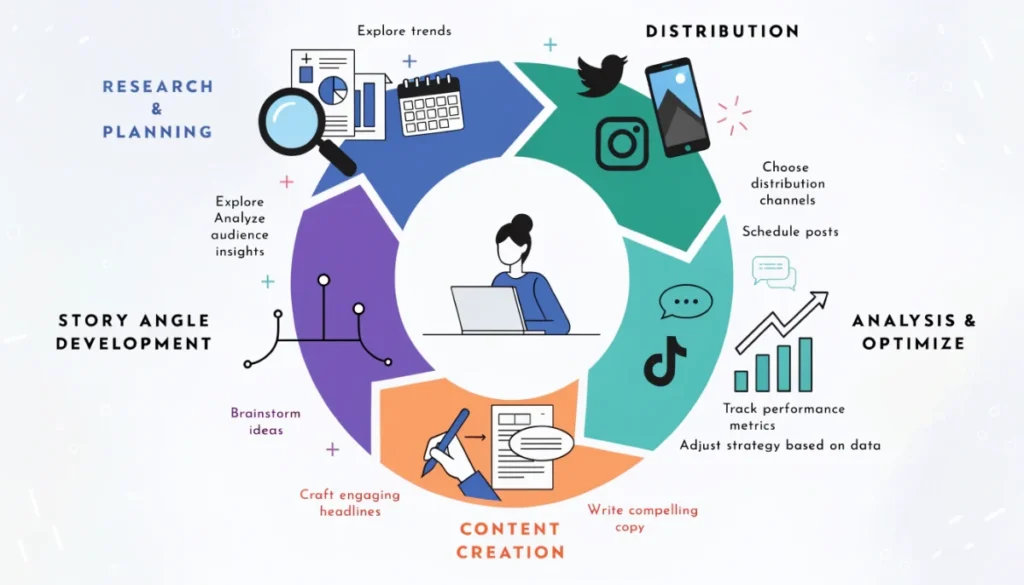
Start by researching your audience segments. Who are they? What do they struggle with?
Use these research methods:
- Read comments on related content
- Check Q&A sites like Quora and Reddit
- Analyze competitor content gaps
- Survey your existing audience
- Study search autocomplete suggestions
Next, map angles to audience segments. Match story types with reader needs.
Finally, prioritize based on search volume and competition. Create high-value, low-competition stories first.
SEO Benefits of Multiple Stories Per Topic
Your topics | multiple stories dramatically improves search rankings.
Search engines want comprehensive topic coverage. When you create multiple stories around one subject, you signal expertise.
Here’s what happens:
You rank for more keywords naturally. Each story targets different search terms. Your “remote work tutorial” ranks for “how to work from home.” Your “remote work case study” ranks for “remote team success stories.”
Internal linking becomes powerful. You connect related stories together. This distributes authority across your content. It keeps readers on your site longer.
Topic clusters emerge organically. Your pillar content covers the main topic broadly. Supporting stories dive deep into specific angles.
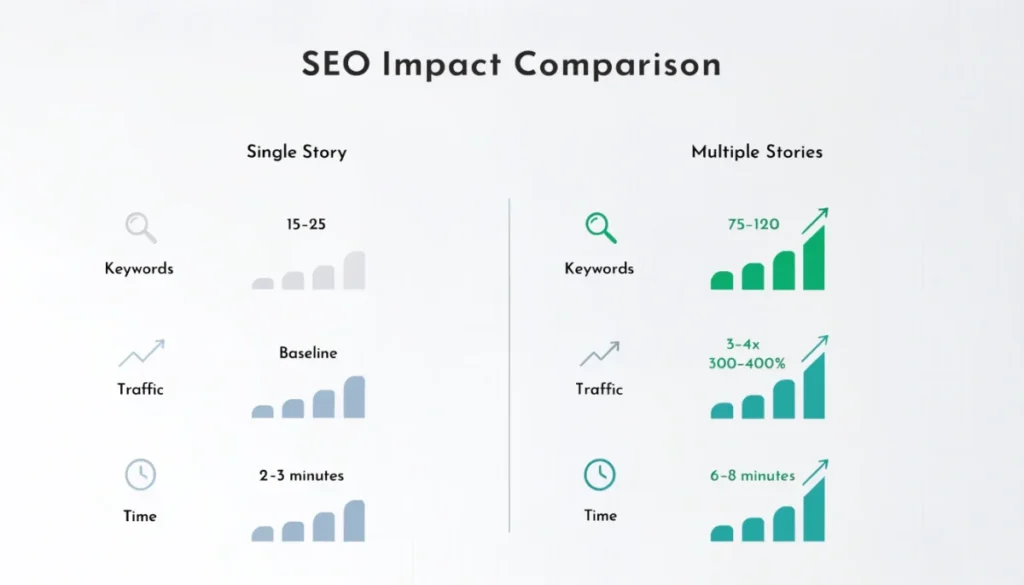
Let me show you the impact:
| Approach | Keywords Ranked | Organic Traffic | Time on Site |
|---|---|---|---|
| Single Story | 15-25 | Baseline | 2-3 minutes |
| Multiple Stories | 75-120 | 3-4x higher | 6-8 minutes |
| Content Cluster | 150-250 | 6-10x higher | 10-15 minutes |
The numbers speak clearly. Multiple stories outperform single pieces consistently.
Optimizing Multiple Stories for Search
Each story needs unique optimization. Don’t cannibalize your own rankings.
Follow this optimization framework:
Target different keywords per story. Use keyword variations and long-tail phrases. Your main topic stays consistent, but search terms differ.
Create unique titles and meta descriptions. Each should promise specific value.
Build a clear internal linking structure. Link from broader stories to specific ones. Connect related angles together.
Update stories regularly. Fresh content signals relevance to search engines.
Managing Multiple Stories Without Burning Out
Creating your topics | multiple stories sounds overwhelming. It doesn’t have to be.
The key is strategic repurposing. You’re not creating from scratch every time.
Start with one comprehensive piece. This becomes your pillar content. Then extract different angles from it.
Your 3000-word guide contains multiple stories already:
- Extract how-to sections into tutorials
- Turn examples into case studies
- Expand data points into analysis pieces
- Convert tips into social media content
Use a content calendar to plan story releases. Space them out over weeks or months. This maintains consistency without overwhelming you.
Batch create content. Dedicate specific days to researching, writing, or filming. This improves efficiency and quality.
Tools That Simplify Multi-Story Creation
The right tools make this process manageable.
Content planning tools:
- Notion or Trello for organizing story angles
- Google Sheets for content calendars
- Airtable for tracking performance
Creation tools:
- Grammarly for editing multiple pieces
- Canva for visual content variations
- Descript for repurposing video into audio and text
Analytics tools:
- Google Analytics for traffic patterns
- SEMrush for keyword tracking
- Hotjar for engagement metrics
These tools help you maintain quality across multiple stories. They automate repetitive tasks so you focus on creativity.
Measuring Success With Multiple Story Content
Your topics | multiple stories needs proper measurement.
Track these key metrics:
Engagement metrics show how readers interact. Monitor time on page, scroll depth, and comments. High engagement means your stories resonate.
Search performance reveals ranking improvements. Check keyword positions, organic traffic growth, and click-through rates.
Conversion metrics measure business impact. Track email signups, product purchases, or service inquiries from each story.
| Metric | What It Tells You | Ideal Range |
|---|---|---|
| Time on Page | Story engagement | 4-8 minutes |
| Bounce Rate | Content relevance | Below 40% |
| Pages per Session | Topic exploration | 3-5 pages |
| Organic Traffic Growth | SEO effectiveness | 10-30% monthly |
| Conversion Rate | Business impact | 2-5% |
Compare stories against each other. Which angles perform best? Which formats engage most? Use these insights to refine your strategy.
Don’t expect immediate results. Multiple stories build authority over time. Give it 3-6 months for significant impact.
Adjusting Based on Performance Data
Data guides smart decisions.
If personal narratives outperform tutorials, create more personal content. If case studies drive conversions, prioritize those.
Look for patterns across your best stories:
- What length works best?
- Which topics generate most engagement?
- What formats drive action?
Test different approaches systematically. Change one variable at a time. Measure results. Implement winners.
Remember: your audience tells you what they want through their behavior. Listen to the data.
Common Challenges and Practical Solutions
Your topics | multiple stories comes with challenges. Here’s how to overcome them.
Challenge 1: Content overwhelm and burnout
Start small. Create 2-3 angles per topic initially. Expand as you get comfortable.
Focus on quality over quantity. Three excellent stories beat ten mediocre ones.
Challenge 2: Maintaining consistency across stories
Develop clear brand guidelines. Document your voice, tone, and style. Reference these when creating content.
Create templates for each story type. This ensures consistency while allowing flexibility.
Challenge 3: Avoiding keyword cannibalization
Research thoroughly before writing. Ensure each story targets unique keywords.
Use keyword variations intentionally. “Remote work tips” differs from “remote work tools” and “remote work challenges.”
Challenge 4: Resource management
Outsource strategically. Delegate design, research, or editing. Focus your energy on strategy and core content.
Repurpose ruthlessly. Turn blog posts into videos, podcasts into articles, and webinars into multiple smaller pieces.
Frequently Asked Questions
Start Creating Your Multiple Stories Today
Your topics | multiple stories transforms content strategy from overwhelming to achievable.
You’ve learned how to identify different angles from one topic. You understand platform-specific adaptation. You know how to measure success and overcome common challenges.
Remember these key takeaways:
Multiple stories reach diverse audiences more effectively than single pieces. Different angles serve different needs and preferences.
SEO benefits compound over time. More stories mean more keywords, better rankings, and increased authority.
Start small with 2-3 angles per topic. Expand based on performance data and audience feedback.
Quality always beats quantity. Three excellent stories outperform ten mediocre ones.
Your next step is simple: Pick one existing topic from your content. Identify three different angles you could explore. Create an outline for each.
Don’t wait for perfect conditions. Start with one additional story this week. Test it. Measure results. Refine your approach.
Your audience is waiting for content that speaks directly to their needs. Your topics | multiple stories delivers exactly that. Now go create something valuable.