What Does GMFU Mean? The Complete Guide to This Popular Slang Term
What does GMFU mean in today’s digital conversations? You’ve probably seen this acronym pop up on your phone or social media feed. It left you scratching your head, wondering what your friend actually meant. The confusion is real, especially when slang evolves faster than you can keep up.
Here’s the good news: GMFU has a straightforward meaning once you know it. This acronym stands for “Got Me F***ed Up” and expresses frustration, disbelief, or being upset about something. People use it when they’re annoyed, shocked, or feeling disrespected.
In this guide, you’ll discover exactly what GMFU means across different platforms. You’ll learn when to use it, how to respond, and why it’s become so popular. Plus, we’ll break down the context that changes its meaning. By the end, you’ll use this slang like a pro.
Understanding What GMFU Means in Text Messages
GMFU means “Got Me F***ed Up” in text messaging. It’s an expression of strong emotion. People text it when something bothers them deeply.
The acronym captures frustration in just four letters. That’s why it’s so popular. Texting requires quick communication, and GMFU delivers that.
Common Uses in Daily Texting
You’ll see GMFU in several texting scenarios:
- When someone disrespects you or crosses a boundary
- When plans change unexpectedly and inconvenience you
- When you’re shocked by someone’s audacity
- When expressing disbelief about a situation
For example: “He really asked me to cover his shift again? That GMFU.” This shows clear frustration with repeated requests.
Another example: “The price doubled overnight. That GMFU.” Here, it expresses shock and annoyance at an unexpected change.
The Emotional Weight Behind GMFU
GMFU carries significant emotional intensity. It’s not casual slang for minor annoyances. You use it for situations that genuinely upset you.
The phrase indicates you’re legitimately bothered by something. It’s stronger than saying “that’s annoying” or “I’m upset.” GMFU means something has pushed you to your limit.
Think of it as a digital way to vent. Instead of typing out your full frustration, four letters capture it all. That efficiency makes it perfect for quick texts.
Similar to how people use other internet slang like what NFS means, GMFU has become shorthand for complex emotions.
What Does GMFU Mean on Instagram and TikTok?
Social media platforms give GMFU new dimensions. On Instagram and TikTok, context changes everything.
Instagram users drop GMFU in comments and captions. They express reactions to posts, stories, or situations. The meaning stays the same, but usage differs slightly.
Instagram Usage Patterns
On Instagram, GMFU appears in several ways:
In comments: “This price GMFU 😤” shows frustration about cost. The emoji adds emotional emphasis.
In captions: People share experiences that upset them. They’ll caption photos or stories with GMFU to convey their mood.
In DMs: Friends use it in private messages. It’s more personal there, sharing genuine frustrations.
Instagram’s visual nature adds context. A photo of traffic with “GMFU” tells the whole story without extra words.
TikTok’s Take on GMFU
TikTok users embrace GMFU in video content. They create reaction videos expressing disbelief or frustration.
The platform’s format allows for creative usage:
- Duets: Responding to another video that bothers you
- Text overlays: Adding GMFU to emphasize your point
- Sound trends: Pairing the acronym with popular audio clips
TikTok makes GMFU more performative. It’s not just typed text. It becomes part of the entertainment and storytelling.
Creators often explain situations that “got them f***ed up.” The videos go viral when others relate to the frustration.
GMFU Meaning Across Different Social Platforms
Each platform shapes how people use GMFU. The core meaning remains consistent, but presentation varies.
Snapchat Communication Style
Snapchat users prefer quick, temporary messages. GMFU fits perfectly here.
You’ll see it in:
- Snaps with text overlays: Quick reactions to daily events
- Chat messages: Venting to close friends
- Story captions: Sharing frustrations with your circle
Snapchat’s disappearing nature makes this phrase feel more spontaneous. People share raw emotions without worrying about permanent records.
The platform encourages authentic expression. GMFU captures that perfectly. It’s unfiltered and immediate.
Twitter and Other Platforms
Twitter users tweet GMFU when ranting about topics. The character limit makes acronyms essential.
You’ll find GMFU in:
- Tweet responses to news or events
- Quote tweets expressing disagreement
- Threads explaining frustrating situations
Other messaging apps follow similar patterns. WhatsApp, Discord, and Facebook Messenger all host this phrase conversations. Just like FN means something specific in gaming contexts, this phrase adapts to each platform’s culture.
When and How to Use GMFU Appropriately
Knowing when to use this phrase matters. Context determines if it’s appropriate or offensive.
Appropriate Contexts for GMFU
Use this phrase with friends who understand slang. Close relationships allow for casual language without misunderstanding.
Good situations include:
- Venting to friends about annoying experiences
- Expressing shock in group chats
- Reacting to relatable content on social media
- Sharing frustrations with people who get your humor
Always consider your audience first. Colleagues, family members, or formal contacts might not appreciate the strong language.
Situations to Avoid GMFU
Never use this phrase in professional settings. Emails, work chats, or business communications require different language.
Avoid GMFU when:
- Messaging bosses, coworkers, or clients
- Talking with parents or older relatives (unless they’re cool with slang)
- In educational contexts like school emails
- With people you don’t know well
- In public comments where anyone can see
The profanity makes it unsuitable for many scenarios. Even censored as “GM*U” or “GMFU,” the meaning remains clear.
Professional alternatives exist. Say “That’s frustrating” or “I’m really annoyed” instead. These convey similar feelings without offensive language.
Breaking Down GMFU in Urban Dictionary and Slang Culture
Urban Dictionary defines GMFU as “Got Me F***ed Up.” User submissions explain various usage contexts.
The site shows how slang evolves organically. Multiple definitions exist because people use this phrase differently. That’s natural for living language.
Evolution of Internet Slang
GMFU emerged from online communication culture. Young people created it for quick expression.
Internet slang follows patterns:
- Someone coins a phrase naturally
- Friends adopt it in their circles
- Social media spreads it widely
- Mainstream culture eventually catches on
GMFU followed this exact path. It started in specific communities and expanded everywhere.
Similar acronyms like ML in text show how internet language constantly evolves. New terms appear weekly.
Regional and Cultural Variations
Different groups use GMFU with slight variations. Some add extra emphasis. Others combine it with other slang.
Common variations include:
- “That really GMFU” – Adding intensity
- “Nah, you got me f*ed up”** – Full phrase version
- “GMFU rn” (right now) – Immediate reaction
- “Dead GMFU” – Extremely upset
Cultural context matters too. African American Vernacular English (AAVE) influenced this phrase. Respecting its origins while using it appropriately shows cultural awareness.
Comparing GMFU to Similar Slang Expressions
Understanding GMFU helps when you compare it to related terms. Each acronym serves different purposes.
| Slang Term | Full Meaning | Emotional Tone | Usage Context |
|---|---|---|---|
| GMFU | Got Me F***ed Up | Strong frustration/disbelief | Serious annoyance |
| SMH | Shaking My Head | Disappointment/disbelief | Milder disapproval |
| WTF | What The F*** | Shock/confusion | Immediate reaction |
| BRB | Be Right Back | Neutral | Temporary absence |
| IMO | In My Opinion | Neutral | Sharing thoughts |
Key Differences Between Terms
GMFU vs. SMH: SMH shows mild disapproval. GMFU indicates serious frustration. Use SMH for minor annoyances. Save GMFU for bigger issues.
GMFU vs. WTF: WTF expresses immediate shock. GMFU shows sustained frustration. WTF is your first reaction. GMFU describes ongoing feelings.
GMFU vs. LOL: These sit on opposite emotional spectrums. LOL means something’s funny. GMFU means something’s upsetting. Never confuse them.
Intensity Levels in Digital Communication
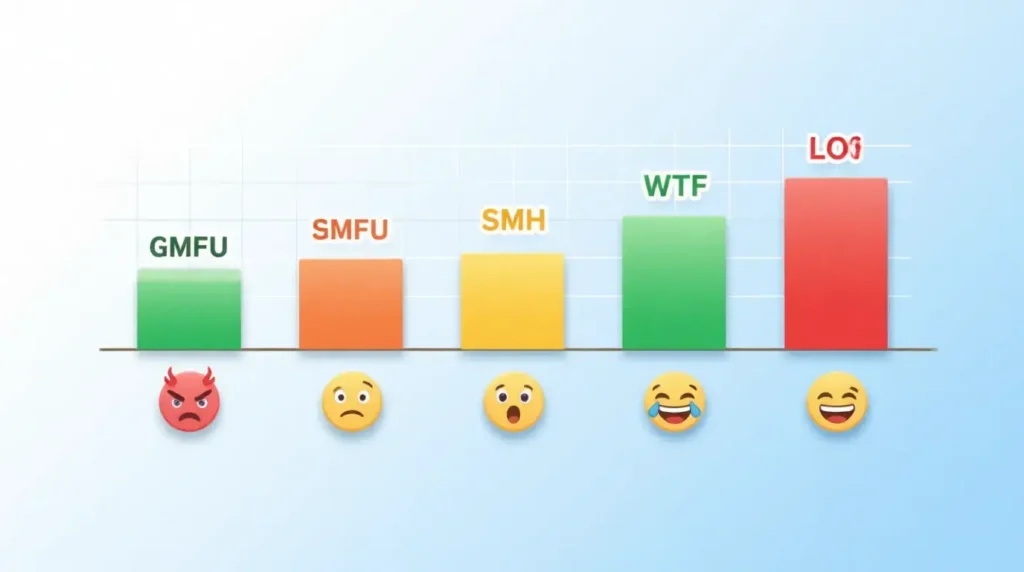
Digital language has a hierarchy of intensity. Understanding this helps you communicate effectively.
Low intensity: “That’s annoying,” “ugh,” “seriously?”
Medium intensity: SMH, “I can’t even,” “not cool”
High intensity: GMFU, WTF, “I’m done”
Choose your level based on the situation. Overusing high-intensity terms dilutes their impact. Save them for genuinely frustrating moments.
For more context on similar expressions, check out the GMFU meaning guide for additional examples.
How to Respond When Someone Uses GMFU
Receiving a GMFU message requires thoughtful response. Your friend is expressing genuine frustration.
Acknowledging Their Feelings
Start by validating their emotions. Don’t dismiss what bothers them.
Good responses include:
- “I totally get why that GMFU”
- “That would frustrate me too”
- “Yeah, that’s not okay”
- “Want to talk about it?”
These show empathy and understanding. You’re not judging their reaction. You’re supporting them.
Offering Support or Solutions
Sometimes people want solutions. Other times they just need to vent.
Ask clarifying questions:
- “Do you want advice or just to vent?”
- “How can I help?”
- “What are you going to do about it?”
This respects their needs. If they want advice, offer practical suggestions. If they’re venting, listen without trying to fix everything.
When Not to Respond
Sometimes staying quiet works best. If someone posts “GMFU” publicly without directing it at you, they might not want responses.
Skip responding when:
- It’s a general social media post
- They’re clearly venting to themselves
- The situation doesn’t involve you
- Your input might escalate things
Read the room digitally. Context clues tell you if they want engagement.
The Impact of GMFU on Modern Digital Communication
GMFU represents how language adapts to technology. Digital communication creates new expression needs.
Efficiency in Expression
Four letters convey complex emotions. That’s remarkable efficiency.
Traditional communication requires full sentences. “I’m extremely frustrated by this situation and feel disrespected” becomes simply “GMFU.”
This speed matters in fast-paced digital conversations. You need quick expression without losing meaning. Acronyms like GMFU deliver both.
Building Digital Community
Shared slang creates connection. When you use GMFU, you signal you’re part of internet culture.
This builds community through:
- Shared understanding of terms
- In-group language that bonds people
- Quick recognition of emotional states
- Cultural participation in evolving language
Young people especially value this. Slang becomes identity markers. Using GMFU correctly shows you belong.
Generational Communication Gaps
Not everyone understands GMFU immediately. Older generations might need explanation.
This creates interesting dynamics:
Bridges: Young people teach older folks new terms
Barriers: Misunderstandings happen without context
Evolution: Language constantly changes across generations
Every generation develops unique expressions. GMFU is this generation’s contribution to language evolution.
Common Mistakes and Misunderstandings About GMFU
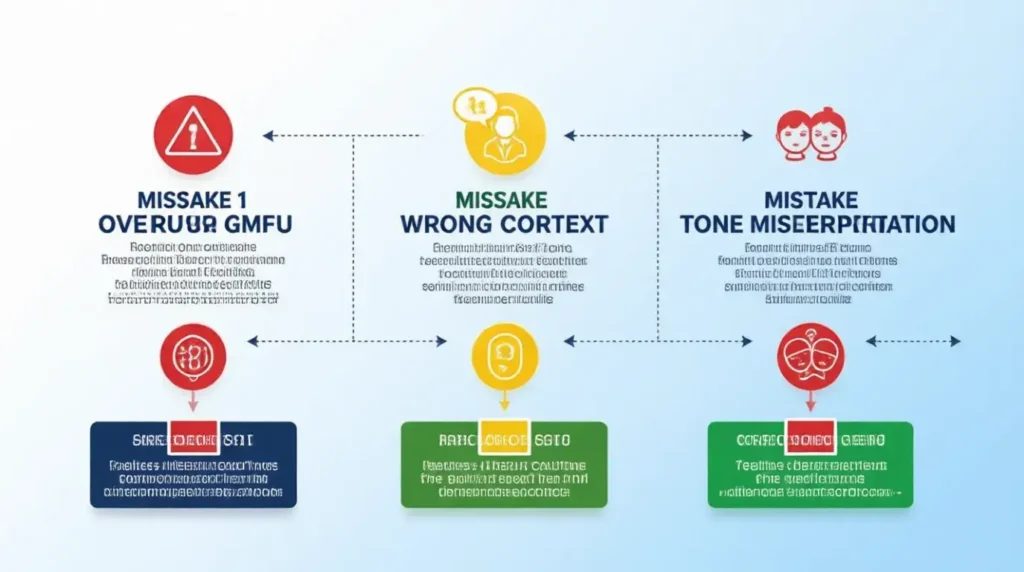
People misuse this phrase sometimes. Learning these mistakes helps you avoid them.
Tone Misinterpretation
Text lacks vocal tone. GMFU might seem more aggressive than intended.
Problems arise when:
- Recipients think you’re angrier than you are
- Sarcasm doesn’t translate through text
- Context clues are missing
- Cultural differences affect interpretation
Always consider how others might read your message. Add context if necessary. Emojis can help convey tone.
Overusing the Term
Using GMFU for every small annoyance weakens its impact. Save it for genuinely frustrating situations.
Signs you’re overusing it:
- You type GMFU multiple times daily
- Minor inconveniences trigger it
- Friends stop taking your frustrations seriously
- The term loses emotional weight
Use varied expressions instead. Say “annoying,” “frustrating,” or “bothers me” for smaller issues. Reserve this phrase for significant problems.
Misunderstanding the Severity
GMFU indicates serious frustration. It’s not playful or casual like “LOL.”
Some people use it jokingly. That’s fine with close friends who understand your humor. But new contacts might think you’re genuinely upset.
Clarify your tone when:
- Using it sarcastically
- Joking about minor issues
- Talking with people who might misunderstand
- The context isn’t obvious
Add indicators like “lol” or “jk” if you’re not seriously frustrated. This prevents confusion.
Frequently Asked Questions
What does GMFU mean in a text message?
GMFU means “Got Me F***ed Up” in text messages. It expresses strong frustration or disbelief about a situation. People text it when something seriously bothers them or crosses boundaries. The acronym captures intense emotions quickly, making it perfect for digital communication.
What does GMFU mean on Snapchat and Instagram?
On Snapchat and Instagram, GMFU maintains the same meaning but appears in different formats. Users add it to photo captions, story text overlays, or comments. The visual context of these platforms adds emphasis to the frustration being expressed. It’s commonly used in casual communication with friends.
Is GMFU appropriate for professional conversations?
No, GMFU is not appropriate for professional settings. The phrase contains profanity and casual slang that doesn’t belong in work emails, business chats, or formal communications. Use professional alternatives like “I’m frustrated” or “That’s concerning” instead. Save this phrase for casual conversations with friends.
What does GMFU mean in text slang culture?
In text slang culture, GMFU represents efficient emotional expression. It’s part of internet language evolution where acronyms replace full phrases. The term originated from online communities and spread through social media. It shows how digital communication creates new ways to convey complex feelings quickly.
How do you respond when someone texts GMFU?
Respond with empathy and support. Acknowledge their frustration with phrases like “I understand why that bothers you” or “That’s not okay.” Ask if they want to talk about it or need help. Sometimes people just need to vent, so listen without immediately offering solutions unless requested.
What does GMFU mean compared to similar acronyms?
GMFU expresses stronger frustration than terms like SMH (Shaking My Head). It’s more intense than casual disappointment. While WTF shows immediate shock, this phrase indicates sustained frustration about a situation. Understanding these differences helps you choose the right expression for your emotional intensity level.
Conclusion
What does GMFU mean? Now you know it stands for “Got Me F***ed Up” and expresses genuine frustration. This acronym captures complex emotions in four simple letters.
You’ve learned when to use GMFU appropriately with friends and when to avoid it in professional settings. Context matters, and each social platform adds its own flavor to the term. Remember that GMFU carries emotional weight beyond casual annoyance.
Use this slang thoughtfully. Save it for situations that genuinely upset you. Overusing it dilutes its impact and might make people take your frustrations less seriously.
Digital language keeps evolving. GMFU represents how we adapt communication for modern needs. Stay authentic in your expression while respecting your audience. That balance makes you an effective digital communicator.
Next time something truly frustrates you, you’ll know exactly how to express it. Just remember: use this phrase wisely, and your message will land with the impact you intend.