What Does WTW Mean? Complete Guide to This Popular Slang Term
What does WTW mean in today’s digital conversations? You’ve probably seen it pop up in texts or social media. Maybe someone sent you “WTW” and you’re confused about what they want. Or you want to use it yourself but aren’t sure when it’s appropriate.
Here’s the good news: WTW is simpler than you think. It’s one of those slang terms that makes texting faster and more casual. Once you understand it, you’ll spot it everywhere.
In this guide, you’ll discover exactly what WTW means. You’ll learn when to use it. You’ll see real examples from different platforms. Plus, you’ll avoid common mistakes that make you look out of touch.
Let’s dive in.
What Does WTW Mean: The Basic Definition
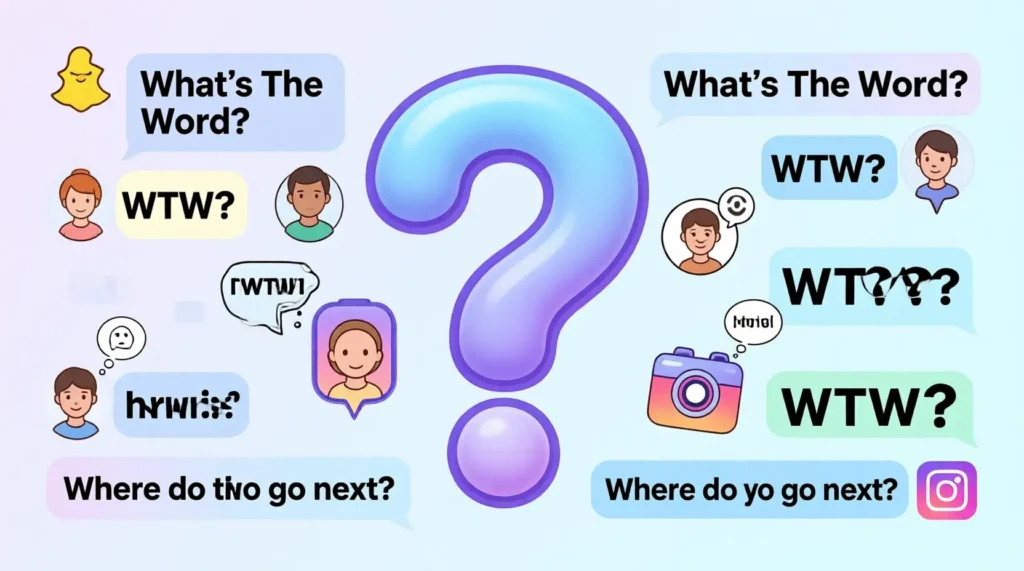
WTW stands for “What’s The Word” or “What’s The Wave.”
It’s a casual greeting. Think of it as texting shorthand for “What’s up?” or “What’s going on?”
People use it to start conversations. It’s friendly and laid-back. No formality required.
The phrase asks what someone is doing or planning. It’s an invitation to chat or hang out.
Primary Meanings of WTW
WTW has two main interpretations:
“What’s The Word” – This is the most common meaning. It asks for updates or news. Similar to saying “What’s happening?” or “Any plans?”
“What’s The Wave” – Popular in certain communities. It means the same thing. “Wave” refers to the vibe or energy. It’s asking what’s going on with someone.
Both meanings work the same way. They’re conversation starters. They show you’re interested in connecting.
How WTW Differs from Other Slang
WTW isn’t the same as WYD (What You Doing). WYD asks about current activity. WTW is more open-ended.
It’s also different from WTM (What’s The Move). WTM specifically asks about plans. WTW can mean that too, but it’s broader.
Think of WTW as the casual opener. It sets a relaxed tone right away.
What Does WTW Mean in Texting and Messaging
What does WTW mean in texting? It’s exactly what we covered above. But context matters.
In text messages, WTW usually starts conversations. Someone sends it when they haven’t talked in a while. Or when they want to make plans.
Common Texting Scenarios
Here’s when you’ll see WTW in texts:
- Friday afternoon: “WTW tonight?” (asking about evening plans)
- Catching up: “Hey, WTW?” (general check-in)
- Making plans: “WTW this weekend?” (asking about availability)
- After an event: “WTW after the game?” (coordinating next steps)
The beauty of WTW? It’s flexible. It adapts to any situation.
Response Expectations
When someone texts you WTW, they expect a quick response. Keep it casual.
Good responses include:
- “Not much, you?”
- “Might hit the gym later”
- “Free tonight, wanna hang?”
- “Just chilling, what about you?”
Don’t overthink it. Match their energy level.
What Does WTW Mean on Snapchat, Instagram, and TikTok
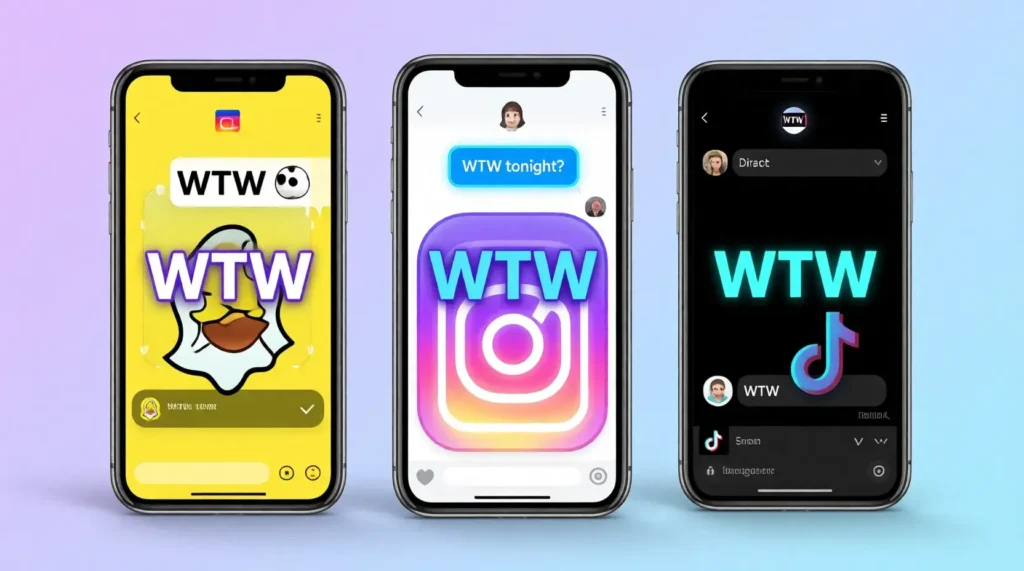
What does WTW mean on Snapchat? The same thing as in regular texting. But platform culture adds nuance.
WTW on Snapchat
On Snap, WTW often comes with a selfie or snap. It’s visual and immediate.
People use it to:
- Check if friends are free to hang
- Start a conversation through snaps
- See who’s available to video chat
- Coordinate group meetups
What does WTW mean on snap in practice? Usually, it’s asking for plans or company.
Example: Someone posts a snap with “WTW 👀” on their story. They’re looking for something to do. They want responses.
WTW on Instagram
What does WTW mean on Instagram? Less common here than Snapchat. But it appears in:
- DM conversations
- Story replies
- Comment sections (rarely)
- Close friends stories
Instagram is more polished. WTW feels more natural in DMs than public posts.
WTW on TikTok
What does WTW mean on TikTok? You’ll see it in:
- Comment sections asking creators about plans
- Duets and stitches
- Private messages
- Video captions (occasionally)
TikTok users often explain slang in videos. Search “WTW meaning” and you’ll find dozens of explanations.
The platform loves teaching slang. It’s part of the culture.
Platform Comparison: Where WTW Works Best
Different platforms suit different communication styles. Here’s how WTW performs:
| Platform | WTW Usage Level | Best Context | Typical Response Time |
|---|---|---|---|
| Snapchat | Very High | Casual hangout plans | 5-30 minutes |
| Text/iMessage | High | Any conversation starter | 10-60 minutes |
| Instagram DM | Medium | Close friends only | 30 minutes – 2 hours |
| TikTok | Low | Comments or DMs | Varies widely |
| Twitter/X | Very Low | Rarely used | N/A |
Snapchat wins for WTW usage. The app’s designed for quick, casual communication. That’s WTW’s sweet spot.
When and How to Use WTW Properly
Knowing what does WTW mean is one thing. Using it correctly is another.
Best Times to Use WTW
Use WTW when:
You want to make spontaneous plans. WTW works great for last-minute hangouts. “WTW in an hour?” gets straight to the point.
You’re checking in with friends. Haven’t talked in a few days? WTW breaks the ice. It’s less formal than “How are you?”
You’re in a casual relationship. With close friends, WTW feels natural. With acquaintances, it might seem too informal.
You want to gauge interest. Not sure if someone’s free? WTW tests the waters. No pressure attached.
When NOT to Use WTW
Avoid WTW in these situations:
- Professional contexts – Don’t send WTW to your boss or clients
- First conversations – Too casual for someone you just met
- Serious discussions – Not appropriate for important topics
- Older generations – They likely won’t understand it
Context is everything. Read the room (or chat).
Age and Demographics
WTW is most popular with:
- Gen Z (born 1997-2012)
- Younger Millennials (born 1990s)
- Urban communities
- Social media-savvy users
Older adults rarely use it. They prefer complete sentences. That’s okay.
Know your audience. Adapt accordingly.
WTW Variations and Alternative Meanings
What does WTW mean slang beyond the basics? A few variations exist.
Regional Variations
Some areas use WTW differently:
“What The What” – An expression of surprise. Less common than “What’s The Word.” Similar to GMFU (Got Me F***ed Up).
“Worth The Wait” – Rare usage. Mostly in gaming or product reviews. Context makes this meaning obvious.
“Walk This Way” – Reference to the Aerosmith song. Not slang usage.
The first definition dominates. You’ll rarely see these alternatives.
Context Clues Matter
How do you know which meaning applies? Look at context:
- In casual chat: “What’s The Word”
- With surprise or confusion: “What The What”
- In reviews or comments: “Worth The Wait”
The surrounding conversation tells you everything.
How to Respond to WTW: Real Examples
Getting WTW can feel awkward if you’re not used to it. Here’s how to handle it smoothly.
Response Strategy Table
| Their WTW Message | Your Situation | Good Response | Why It Works |
|---|---|---|---|
| “WTW tonight?” | You’re free | “Down to chill, wya?” | Shows interest, asks their location |
| “WTW this weekend?” | You’re busy | “Packed this weekend, maybe next week?” | Polite decline with alternative |
| “Hey WTW?” | General check-in | “Nm, just working. What about you?” | Casual, reciprocates question |
| “WTW later?” | You’re unsure | “Not sure yet, I’ll lmk” | Honest, leaves it open |
Matching Energy Levels
Pay attention to how they phrase WTW:
Enthusiastic: “WTW!! 🔥” → Respond with equal energy Casual: “wtw” → Keep it low-key Specific: “WTW for dinner?” → Give a direct answer
Mirror their vibe. It creates better conversations.
When You Don’t Know What to Say
Stuck? Try these universal responses:
- “Nothing much, hbu?”
- “Just the usual, what’s good?”
- “Chilling, what’s the plan?”
- “Not sure yet, you?”
These work in almost any situation. They’re safe and natural.
Similar to how you’d respond to IKR (I Know Right), keep it simple and genuine.
Common Mistakes to Avoid with WTW
Even simple slang can be misused. Here are pitfalls to dodge.
Mistake #1: Using It Too Formally
Wrong: “Hello, WTW regarding our meeting tomorrow?”
This mixing formal and informal language. Pick one style.
Right: “Hey, we still on for tomorrow?”
Mistake #2: Overusing It
Sending WTW every single day gets annoying. It loses meaning.
Space it out. Use variety in your greetings.
Try mixing in:
- “What’s good?”
- “You around?”
- MBN (Must Be Nice) for different contexts
- Regular conversation starters
Mistake #3: Wrong Timing
3 AM WTW message? Probably not ideal. Unless that’s your normal friendship dynamic.
Consider:
- Time zones
- Their schedule
- Your relationship closeness
- The urgency of your question
Mistake #4: Expecting Deep Responses
WTW is casual. Don’t expect life updates or long explanations.
It’s a light touch-base. Not a heart-to-heart invitation.
For deeper conversations, be more direct. “Hey, can we talk about something?”
WTW Across Different Friend Groups
What does WTW mean from a girl versus from other people? The meaning doesn’t change. But the implication might.
Romantic Contexts
When someone you’re interested in sends WTW:
- They might be testing if you’re free
- Could be subtle flirting
- Might want to hang out one-on-one
- Could just be friendly (don’t assume!)
Look for other signals. Is this their first message in a while? Do they usually text first?
Context determines intent.
Friend Group Usage
In group chats, WTW works differently:
“WTW tonight?” in a group = “Anyone down to hang?”
It’s a general call-out. First person to respond usually sets the plan.
This is common in:
- College friend groups
- Weekend planning
- Vacation coordination
- Event meetups
Similar to how LWK (Low-Key) gets used in groups, WTW creates casual energy.
Professional vs Personal
Never blur these lines with WTW:
Personal: “WTW this Friday? 🎉” Professional: “Are you available for a call this Friday?”
Keep slang in personal conversations. Professionalism requires proper language.
Know when to code-switch. It’s a valuable skill.
Evolution of Texting Slang: Where WTW Fits
WTW didn’t appear overnight. It’s part of texting evolution.
The Slang Timeline
Texting slang has generations:
Early 2000s: LOL, BRB, TTYL Late 2000s: SMH, IDK, TBH 2010s: FOMO, Bae, Lit Late 2010s-Now: WTW, IMK (In My Knowledge), NP
Each era brings new terms. WTW emerged as smartphones made texting effortless.
Why New Slang Emerges
People create slang for several reasons:
Speed – Shorter is faster. WTW beats typing “What’s the word?”
Identity – Slang signals belonging. Using WTW shows you’re current.
Exclusivity – Inside language bonds groups. Not everyone knows every term.
Creativity – Language evolves naturally. People enjoy wordplay.
WTW checks all these boxes. That’s why it stuck around.
Future of WTW
Will WTW last? Probably. Here’s why:
It’s versatile. It’s easy to type. It serves a clear purpose.
Some slang fades (TIL (Today I Learned) is more niche). WTW has staying power.
Watch Gen Alpha (born 2010+). They’ll determine if WTW survives or gets replaced.
Frequently Asked Questions
What does WTW mean in a text message?
WTW means “What’s The Word” in text messages. It’s a casual way to ask what someone is doing or if they have plans. People use it to start conversations or make spontaneous hangout plans. It’s similar to saying “What’s up?” but more informal.
What does WTW mean from a girl?
WTW from a girl means the same as from anyone else – “What’s The Word.” The meaning doesn’t change based on gender. However, context matters. She might be asking to hang out, checking in as a friend, or showing interest. Look at your relationship dynamic and other conversation signals.
What does WTW mean on Snapchat versus text?
WTW means the same thing on both platforms – “What’s The Word” or “What’s The Wave.” On Snapchat, it often appears with snaps or on stories, making it more visual. In regular texts, it’s usually standalone. Snapchat users tend to expect faster responses since the app is more immediate.
Can WTW have other meanings besides “What’s The Word”?
Yes, rarely. WTW can mean “What The What” (expressing surprise) or “Worth The Wait” (in reviews). However, these are uncommon. In 95% of cases, WTW means “What’s The Word” or “What’s The Wave.” Context always makes the intended meaning clear.
Is it appropriate to use WTW in professional settings?
No. WTW is too casual for professional communication. Don’t use it with bosses, clients, or colleagues unless you have a very informal workplace culture. Stick to complete sentences in work contexts. Save WTW for personal friendships and casual relationships.
How should I respond when someone sends me WTW?
Keep your response casual and brief. Try “Not much, you?” or “Just chilling, what’s up?” Match their energy level. If they seem excited, respond enthusiastically. If they’re low-key, keep it simple. Don’t overthink it – WTW invites casual conversation, not formal responses. Similar to responding to NP (No Problem) or DTM (Dead to Me), keep it natural.
Conclusion
What does WTW mean? Now you know it’s “What’s The Word” – a casual greeting that asks what’s going on.
You’ve learned when to use it, how to respond, and where it fits in modern texting. WTW works great for spontaneous plans with close friends. It’s perfect for Snapchat, texts, and Instagram DMs.
Remember: keep it casual, match the other person’s energy, and never use it professionally.
The key takeaway? WTW is about connection. It’s a low-pressure way to reach out. It shows you’re thinking about someone without demanding their time.
Next time someone sends you WTW, you’ll know exactly what to do. And when you want to check in with a friend, WTW is your go-to move.
Start using it naturally in your conversations. You’ll fit right in with today’s texting culture.