Blue Stop Sign Meaning: What You Need to Know
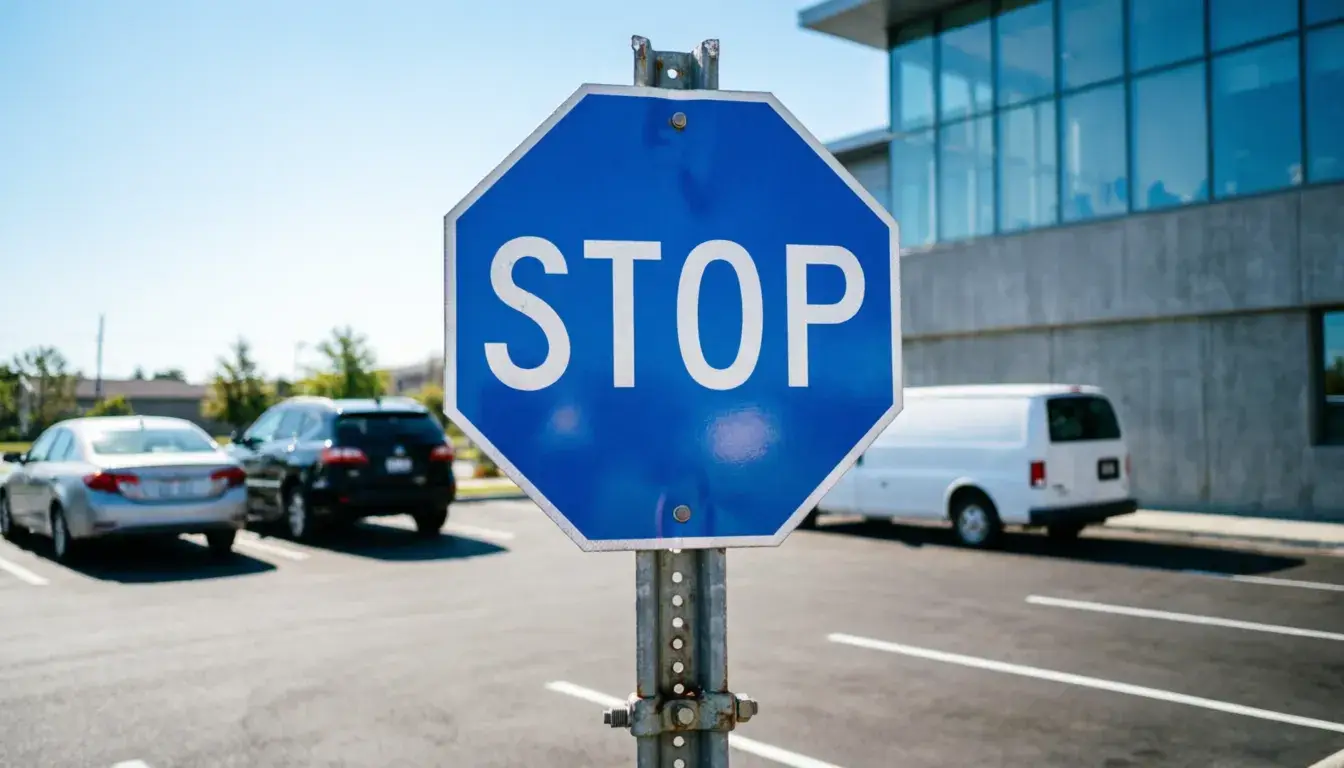
Blue stop sign meaning confuses many drivers. You’ve seen them on private roads, parking lots, or gated communities. They look official but feel different. Here’s why: blue stop signs aren’t legally enforceable like red ones. They’re privately placed markers without government backing. But they still serve a purpose.
Understanding the blue stop sign meaning helps you navigate private property safely. It prevents confusion and potential conflicts. You’ll know when to stop and when it’s just a courtesy. This guide covers everything from their legal status to practical usage.
We’ll explore why property owners use them. You’ll learn the difference between official and private signs. Plus, we’ll cover what happens if you ignore one. By the end, you’ll be fully informed. Let’s dive in.
What Is a Blue Stop Sign?
A blue stop sign is a traffic control device used on private property. It mimics the traditional red stop sign in shape. But the color change makes a crucial legal distinction. Property owners install these signs to manage traffic flow. They’re common in parking lots, apartment complexes, and business parks.
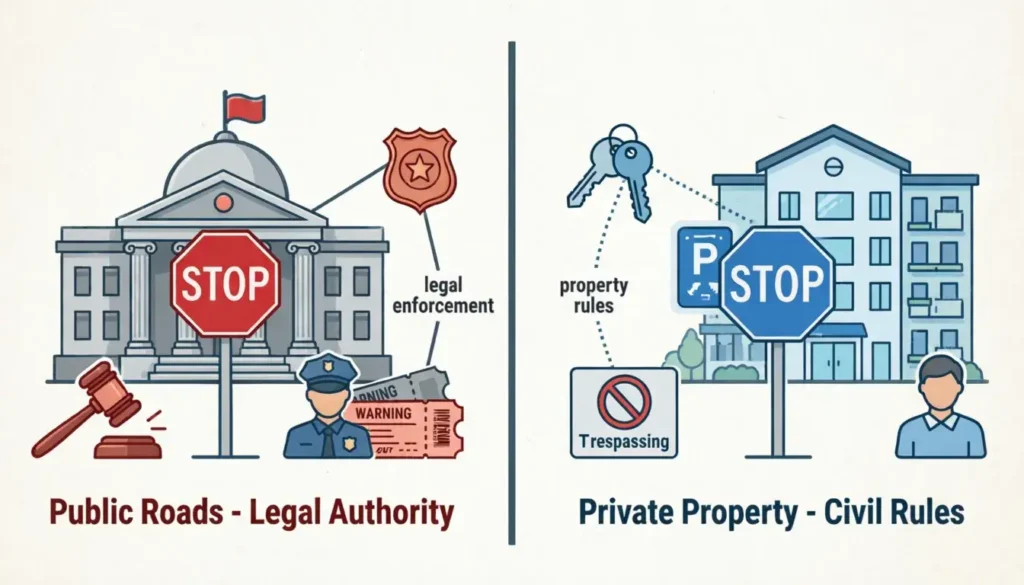
The blue stop sign meaning is simple: it’s a private request, not a law. Unlike red stop signs backed by traffic codes, blue ones have no legal authority. Police cannot ticket you for running a blue stop sign. However, property owners can still enforce their rules. This might include towing or banning you from the premises.
Why Blue Instead of Red?
The color distinction is intentional and legally required. Federal law reserves red for official traffic control devices. Only government entities can install red stop signs. Private property owners must use different colors. Blue is the most popular alternative. Some places use white or yellow stop signs too.
This protects public safety. Imagine confusion if private signs looked identical to official ones. Drivers wouldn’t know which rules are enforceable. The color coding keeps things clear. It’s similar to how slang terms have specific meanings in different contexts. The blue stop sign meaning prevents legal complications.
Where You’ll Find Blue Stop Signs
Blue stop signs appear in various private locations:
- Shopping mall parking lots and drive-through lanes
- Apartment complex driveways and internal roads
- Gated community entrances and intersections
- Business park roadways and employee parking areas
- Private school campuses and hospital grounds
- Gas station exits and car wash facilities
These locations need traffic control without government intervention. Property owners want safe traffic flow. But they can’t install official red signs. Blue stop signs fill this gap perfectly. They’re a practical solution for private traffic management.
The Legal Status of Blue Stop Signs
The blue stop sign meaning explanation involves understanding private property rights. These signs lack the legal weight of public traffic signs. You won’t receive a moving violation for ignoring one. Traffic courts don’t prosecute blue stop sign violations. This is a critical distinction every driver should know.
However, property owners retain rights to enforce their rules. They can take civil action if you cause damage. Insurance claims might be affected if an accident occurs. Your behavior on private property still matters. Just because it’s not criminal doesn’t mean it’s consequence-free.
Federal and State Regulations
The Manual on Uniform Traffic Control Devices (MUTCD) governs official signage. It specifies that stop signs must be red with white letters. This federal standard applies to all public roadways. States cannot override this requirement. Private property falls outside MUTCD jurisdiction.
Most states explicitly prohibit unauthorized red stop signs. Installing red stop signs on private property can result in fines. Property owners must use alternative colors. Blue is widely accepted but not universally mandated. Some jurisdictions prefer white or specify other alternatives. Always check local ordinances before installing traffic signs. Understanding these regulations matters as much as knowing common abbreviations.
Can You Get Ticketed?
No, police cannot issue traffic citations for blue stop sign violations. These signs aren’t part of the legal traffic code. Law enforcement lacks jurisdiction over private traffic control. Your driving record won’t be affected. No points will be added to your license.
But consequences still exist. Property owners can ban you from their premises. They might call police for trespassing if you return. Your actions could affect civil liability in accidents. Insurance companies review all circumstances during claims. Respect for private property rules protects you legally.
Blue Stop Sign Meaning and Purpose
The blue stop sign meaning purpose extends beyond simple traffic control. Property owners use these signs to create safer environments. They reduce collision risks at blind intersections. They help organize traffic flow in busy parking areas. These signs prevent chaos without requiring government approval.
Think of them as strong suggestions with teeth. While not legally binding, they carry property owner authority. Ignoring them can lead to property access denial. Most drivers follow them instinctively anyway. The familiar octagon shape triggers learned stopping behavior. This makes blue stop signs surprisingly effective.
Safety Benefits
Blue stop signs significantly improve private property safety. They prevent T-bone collisions at parking lot intersections and they protect pedestrians crossing internal roadways. They slow down speeding drivers in residential communities. These benefits are tangible and measurable.
Property owners report fewer accidents after installation. Insurance premiums may decrease with proper traffic control. Residents feel safer in their communities. Customers appreciate organized parking areas. The blue stop sign meaning reasons include all these safety advantages. Like understanding different terms, knowing these signs helps everyone navigate safely.
| Feature | Red Stop Sign | Blue Stop Sign |
| Legal Authority | Government backed | Private property only |
| Enforcement | Police can ticket | Property owner only |
| Consequences | Fines, points, court | Towing, property ban |
| Installation | Government only | Property owner |
| Location | Public roads | Private property |
Blue Stop Sign Meaning on Private Property
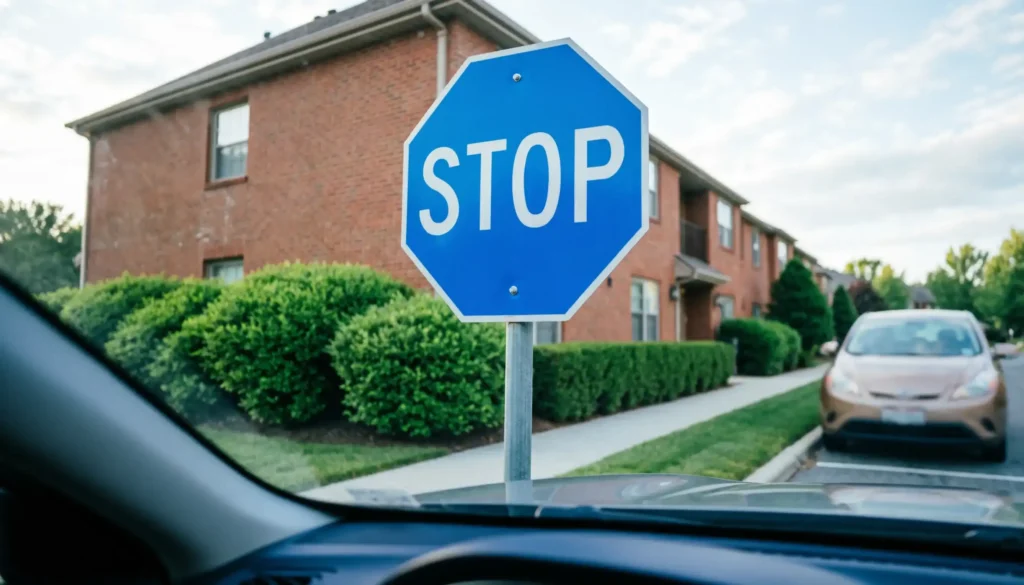
The blue stop sign meaning on private property relates to owner control. Private property owners have broad authority over their land. They set rules for access and use. Traffic signs are part of that control. Blue stop signs communicate expectations to visitors.
When you enter private property, you accept their terms. This includes following posted signs and rules. The blue stop sign meaning private property contexts is consent-based. You choose to follow them by being there. Property owners can revoke access for non-compliance.
Property Owner Rights
Owners have extensive rights regarding traffic control. They can install signs anywhere on their property and they can set speed limits and create one-way systems. They can restrict certain vehicle types. These rules apply to all visitors and tenants.
Enforcement methods vary by situation. Towing is common for serious violations. Warning notices might be issued first. Repeat offenders face property bans. Commercial properties might pursue damages in accidents. Understanding these rules is as important as knowing slang abbreviations.
Common Private Property Locations
Different private properties use blue stop signs differently. Apartment complexes place them at building intersections. Shopping centers use them throughout parking lots. Office parks install them on internal roads. Hospitals use them near emergency vehicle routes.
Each location has unique traffic patterns. Shopping malls deal with heavy pedestrian traffic. Apartments manage resident and visitor vehicles. Business parks control employee and delivery access. The blue stop sign meaning private areas varies by context. But the core purpose remains consistent: safe traffic control.
Blue Stop Sign Meaning Traffic Rules
The blue stop sign meaning traffic rules section addresses practical behavior. Should you stop at blue stop signs? Yes, you should. Even without legal obligation, stopping makes sense. It protects you from accidents and it shows respect for property rules. It prevents complications if incidents occur.
Treat blue stop signs like official ones. Come to a complete stop. Check all directions for traffic. Yield to pedestrians and other vehicles. Proceed only when safe. This approach keeps you safe legally and physically. Many people don’t realize how important context is in understanding traffic rules.
Best Practices for Drivers
Follow these guidelines when encountering blue stop signs:
- Always come to a complete stop
- Look for pedestrians in all directions
- Yield to vehicles that arrived first
- Proceed cautiously when your turn comes
- Avoid blocking pedestrian crossings
- Watch for backing vehicles in parking areas
These practices protect everyone. They reduce accident risks significantly. They show responsible driving behavior. Property owners appreciate compliant drivers. You avoid potential conflicts or consequences.
Insurance Considerations
Your insurance company reviews all accident details. Running a blue stop sign affects fault determination. Even without a ticket, you might be deemed negligent. This impacts claim outcomes and coverage. Higher premiums might result from such findings.
Some policies have specific private property clauses. These might limit coverage in certain situations. Always review your policy terms. Understand how private property accidents are handled. Following blue stop signs protects your insurance standing. Sometimes knowing when to stop matters as much as understanding slang.
Blue Stop Sign Meaning History
The blue stop sign meaning history traces back decades. Early private properties struggled with traffic control. They couldn’t legally install red stop signs. Confusion reigned about acceptable alternatives. Different properties used various colors and designs.
Eventually, industry standards emerged. Blue became the preferred alternative color. It was distinct enough from red. It maintained visibility and recognition. Other colors like white and yellow also gained acceptance. But blue dominated private property applications.
Evolution of Traffic Sign Standards
Stop signs started as black and white in 1915. Red became standard in 1954. The octagon shape was chosen for instant recognition. Federal standards tightened over the years. The MUTCD established strict color requirements.
Private properties needed alternatives as regulations tightened. Blue stop signs emerged as the practical solution. They maintained the familiar octagon shape. The color change provided legal distinction. This compromise satisfied everyone involved. Understanding how terms evolve parallels how signage standards developed.
Modern Usage Trends
Blue stop signs are increasingly common today. More private properties recognize their value. Homeowners associations install them regularly. Commercial properties update their signage. New developments include them in planning stages.
Technology may change future applications. Smart signs with LED lights emerge. Digital displays offer variable messaging. But the blue stop sign meaning alternative remains relevant. Traditional signs still serve most situations effectively. They’re affordable, reliable, and proven.
Blue Stop Sign Meaning Difference
The blue stop sign meaning difference from red signs is substantial. Beyond color, the legal implications differ dramatically. Red signs carry criminal penalties for violations. Blue signs involve civil matters only. This distinction affects enforcement and consequences.
Recognition factors also vary. Red stop signs trigger automatic compliance. Blue signs might cause brief confusion. Drivers must think about context. This cognitive difference impacts effectiveness. But familiarity grows with exposure. Similar to how people learn new expressions like common abbreviations, drivers adapt to blue signs.
| Violation Type | Red Stop Sign | Blue Stop Sign |
| Criminal Record | Yes (traffic offense) | No |
| License Points | 2-4 points | 0 points |
| Fines | $50-$500 | $0 |
| Court Appearance | Possible | Not applicable |
| Insurance Impact | Rate increase | If accident occurs |
Blue Stop Sign Meaning Traffic Safety
The blue stop sign meaning traffic safety connection is direct. These signs prevent accidents on private property. They reduce collision rates at intersections. They protect pedestrians in busy areas. Statistics show their effectiveness clearly.
Properties without adequate traffic control see more incidents. Parking lots become dangerous without proper signs. Residential communities experience speeding and near-misses. Blue stop signs address these problems affordably. They provide visual control without expensive alternatives. Sometimes simple solutions work best, much like how clear communication prevents misunderstandings.
Accident Prevention
Blue stop signs prevent specific accident types. T-bone collisions decrease significantly. Rear-end accidents reduce at controlled intersections. Pedestrian strikes become less common. Vehicle-vehicle conflicts resolve more smoothly.
The psychological impact matters too. Signs create awareness of intersection presence. They force drivers to evaluate surroundings. They establish right-of-way expectations. This mental preparation prevents many accidents. Drivers make better decisions at controlled intersections.
Pedestrian Protection
Blue stop signs especially benefit pedestrians. Shopping areas see heavy foot traffic. Apartment complexes have children and pets. Hospital grounds serve mobility-impaired individuals. These vulnerable users need protection.
Signs give pedestrians crossing priority. Stopped vehicles become predictable. Drivers become more aware of surroundings. Crosswalk visibility improves at signed intersections. Everyone benefits from this organized system.
Frequently Asked Questions
What does a blue stop sign mean?
A blue stop sign indicates traffic control on private property. It functions similarly to a red stop sign but lacks legal enforcement power. Property owners install them to manage traffic flow and improve safety. While not government-backed, you should still obey them to avoid property access issues and potential civil liability.
Can you get a ticket for running a blue stop sign?
No, police cannot issue traffic tickets for blue stop sign violations. These signs exist on private property outside police jurisdiction. However, property owners can take other actions. They might tow your vehicle, ban you from the property, or pursue civil action if accidents occur.
Why are some stop signs blue instead of red?
Blue stop signs are used on private property where red signs aren’t legally permitted. Federal law reserves red stop signs for government-installed traffic control. Private property owners must use alternative colors like blue. This prevents confusion between enforceable public signs and private property requests.
Where are blue stop signs commonly found?
Blue stop signs appear in shopping mall parking lots, apartment complexes, gated communities, business parks, and hospital grounds. Any private property needing traffic control might use them. They’re especially common where private roads intersect or where pedestrian traffic is heavy.
Is there a blue stop sign meaning difference in traffic rules?
Yes, blue stop signs differ legally from red ones. Red signs are legally enforceable with criminal penalties. Blue signs are private property rules with civil consequences only. However, both serve the same practical purpose of controlling traffic and preventing accidents at intersections.
What are blue stop sign meaning regulations?
Regulations vary by jurisdiction but generally prohibit red stop signs on private property. The Manual on Uniform Traffic Control Devices governs public signs only. Private properties must use alternative colors. Blue is widely accepted, though some areas prefer white or yellow alternatives.
Conclusion
Understanding blue stop sign meaning protects you legally and physically. These private property traffic controls serve important safety functions. They lack criminal enforcement but carry real consequences. Respecting them prevents accidents and property conflicts.
Remember the key distinctions. Blue signs indicate private property control. Red signs represent government authority. Both deserve your respect and compliance. The color difference prevents legal confusion while maintaining safety.
Always treat blue stop signs seriously. Come to complete stops. Check for traffic and pedestrians. Proceed only when safe. This approach keeps everyone protected. It shows consideration for property rules and fellow drivers.
Next time you encounter a blue stop sign, you’ll know exactly what to do. Stop completely. Evaluate your surroundings. Proceed safely. Share this knowledge with others. Safe driving benefits everyone on the road.