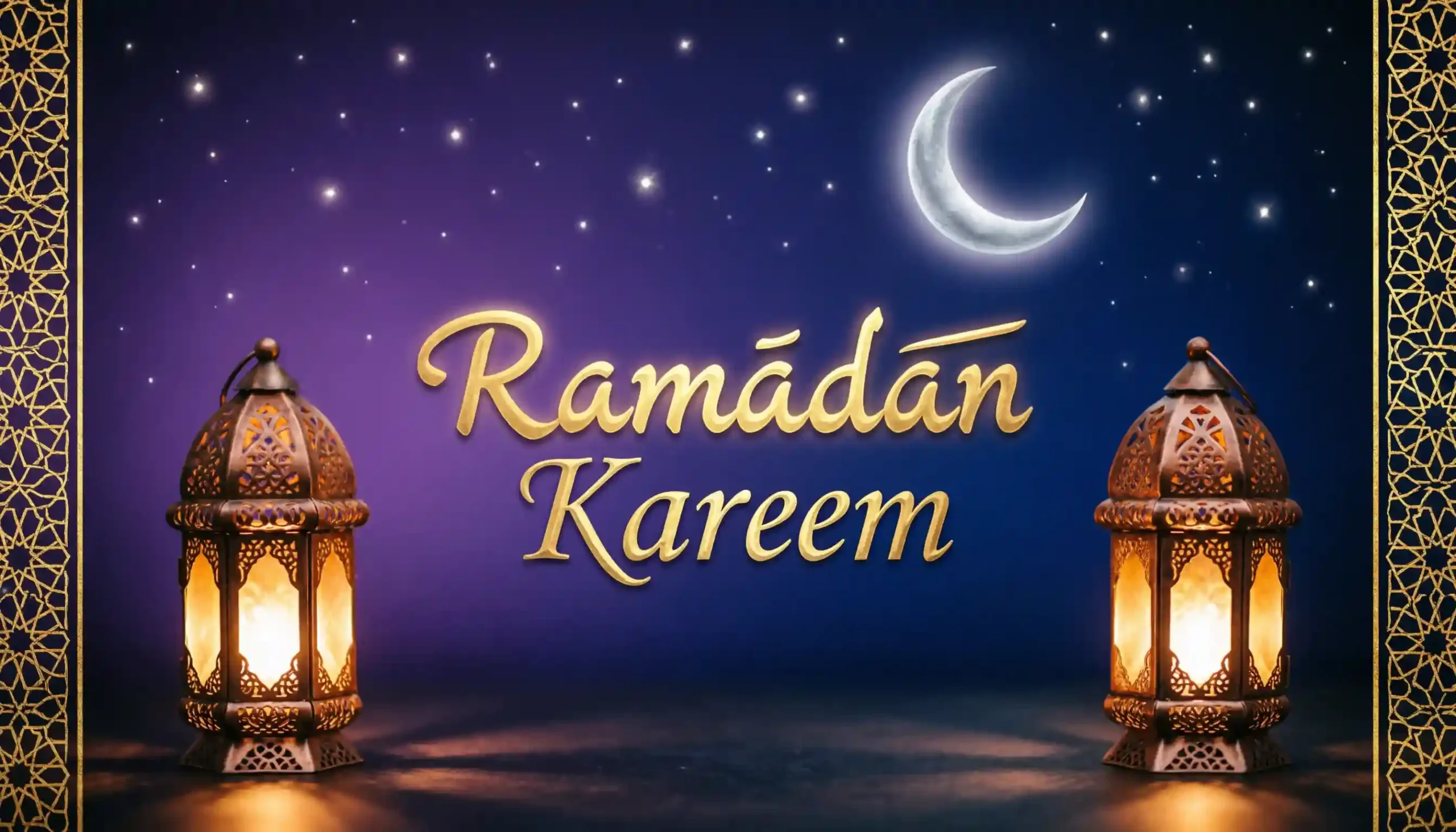
Ramadan Kareem Meaning: Everything You Need to Know About This Sacred Greeting
Ramadan Kareem meaning confuses many people outside the Muslim community. You hear it every year during the holy month. But what does it actually mean? Why do Muslims use this specific phrase? Here’s the truth: understanding this greeting helps you connect with over 1.8 billion Muslims worldwide. It shows respect for their faith and culture. In this guide, you’ll discover the exact meaning, proper usage, and cultural significance. You’ll learn when to say it and alternatives you can use. Plus, you’ll understand why this phrase matters so much during Islam’s holiest month.
What Does Ramadan Kareem Mean in English?
The ramadan kareem meaning in english translates to “Generous Ramadan.” Let’s break it down word by word.
Ramadan refers to the ninth month of the Islamic calendar. It’s when Muslims fast from dawn to sunset. This month holds deep spiritual significance in Islam.
Kareem means generous, noble, or bountiful in Arabic. It describes the abundant blessings Muslims receive during this month.
Together, the phrase celebrates the generosity of Ramadan. Muslims believe Allah’s mercy increases during this time. Blessings flow more freely. Rewards for good deeds multiply.
Why “Generous” Ramadan?
The word “generous” captures Ramadan’s essence perfectly. Here’s why:
- Spiritual rewards multiply 70 times or more
- Community bonds strengthen through shared experiences
- Charitable giving reaches its peak
- Personal growth accelerates through self-discipline
Think of it as wishing someone abundance. You’re hoping they receive all the blessings this month offers. It’s like saying, “May this Ramadan be filled with generosity for you.”
The Deeper Spiritual Context
Muslims don’t just fast for physical reasons. Ramadan represents a complete spiritual reset. The ramadan kareem meaning in islam goes beyond simple translation.
This month teaches patience, empathy, and gratitude. Fasting builds compassion for those who struggle daily. Prayer intensifies. Quran recitation increases. Muslims seek forgiveness and strengthen their faith.
Ramadan Kareem Meaning in Arabic: The Original Language
Understanding the ramadan kareem meaning in arabic adds depth to your knowledge. Arabic carries nuances that English translations miss.
In Arabic script, it’s written as: رمضان كريم
The word “كريم” (Kareem) has multiple layers:
- Generous
- Noble
- Honorable
- Dignified
- Magnanimous
Why Arabic Matters for This Phrase
Arabic is the language of the Quran. Every Muslim prayer uses Arabic. The language itself carries spiritual weight. When you say “Ramadan Kareem” in Arabic, you’re using the authentic expression. It connects you directly to Islamic tradition.
Many Muslims worldwide don’t speak Arabic as their first language. Yet they still use Arabic phrases for Islamic concepts. This preserves the original meaning and spiritual intention. Similar to how internet slang maintains its meaning across cultures, Islamic phrases keep their significance globally.
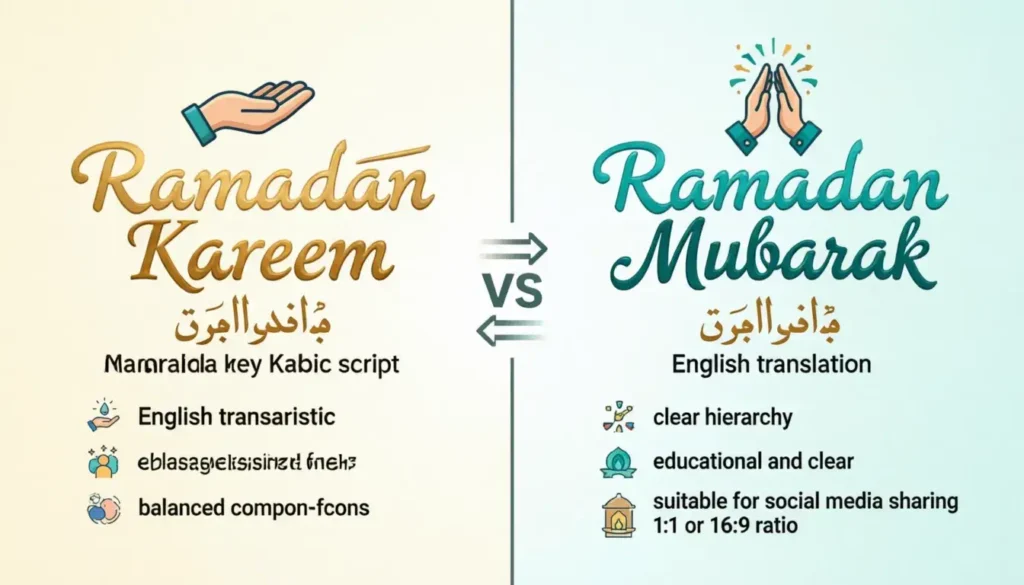
Ramadan Kareem vs Ramadan Mubarak: Key Differences
People often confuse these two greetings. Let’s clarify the ramadan kareem meaning vs ramadan mubarak debate.
| Aspect | Ramadan Kareem | Ramadan Mubarak |
|---|---|---|
| Literal Meaning | Generous Ramadan | Blessed Ramadan |
| Focus | Generosity and abundance | Blessings and happiness |
| Usage | Emphasizes giving nature | Emphasizes blessed nature |
| Popularity | Common in Gulf countries | Widely used globally |
| Theological View | Some scholars debate | Universally accepted |
Which One Should You Use?
Both are acceptable and respectful. Here’s a simple guide:
Use Ramadan Kareem when:
- Emphasizing charity and generosity
- Speaking with Gulf Arabs
- Discussing the abundant blessings
Use Ramadan Mubarak when:
- You want a universally safe option
- Unsure which to choose
- Focusing on general blessings
Think of it like choosing between “Merry Christmas” and “Happy Holidays.” Both convey good wishes. Neither is wrong. Context and preference matter most.
Ramadan Kareem Meaning Across Different Languages
Muslims live in every corner of the world. The phrase adapts to local languages while keeping its essence. Let’s explore these variations.
South Asian Translations
Ramadan kareem meaning in urdu: رمضان کریم
Urdu speakers understand it as “Generous Ramadan” exactly like Arabic. Pakistan and India use this phrase commonly.
Ramadan kareem meaning in hindi: रमज़ान करीम
Hindi uses similar words due to shared roots with Urdu. The meaning stays consistent.
Ramadan kareem meaning in bengali: রমজান করিম
Bengali Muslims say “রমজান করিম” (Romjan Korim). The pronunciation varies slightly. The meaning remains identical.
Southeast Asian Understanding
Ramadan kareem meaning in tagalog:
Filipinos say “Ramadan Kareem” in Arabic. Some add “Maligayang Ramadan” (Happy Ramadan) in Filipino. Both work well together.
Ramadan kareem meaning in malayalam:
Malayalam speakers in Kerala, India use: റമദാൻ കരീം. They understand the generous, blessed nature.
South Indian Languages
Ramadan kareem meaning in tamil: ரமலான் கரீம்
Tamil Muslims use the phrase during the holy month. Charity and community meals feature prominently.
Ramadan kareem meaning in telugu: రంజాన్ కరీమ్
Telugu-speaking Muslims celebrate with the same greeting. The spirit of generosity translates perfectly.
How to Use Ramadan Kareem Properly
Knowing when and how to use this greeting matters. Here’s your practical guide.
Best Times to Say It
During Ramadan month:
- When greeting Muslim friends or colleagues
- At the start of Ramadan (first sighting of the moon)
- Throughout the entire month
- When breaking fast together (Iftar)
Avoid saying it:
- After Ramadan ends (use Eid Mubarak instead)
- During other Islamic months
- In combination with non-Islamic holidays
Appropriate Responses
When someone wishes you “Ramadan Kareem,” respond with:
- “Ramadan Kareem to you too”
- “Khair Mubarak” (May goodness be blessed)
- “Allah Kareem” (Allah is generous)
- “Wa antum bi-khair” (And may you be well)
These responses show respect and cultural awareness. Just like understanding common expressions helps in daily conversation, knowing proper responses matters here.
The Cultural Significance of “Generous Ramadan”
The generous ramadan concept shapes Muslim behavior during this month. It’s not just words. It’s a call to action.
Charity Reaches Its Peak
Muslims give more during Ramadan than any other month. Food banks fill up. Mosques organize free meals. Wealthy individuals distribute aid. This generosity flows from the phrase itself.
Common charitable acts:
- Providing Iftar meals for fasting people
- Donating to local mosques
- Supporting orphans and widows
- Helping refugees and the poor
One good deed during Ramadan equals 70 good deeds in other months. This multiplication effect encourages extreme generosity. The phrase “Ramadan Kareem” reminds everyone to embody this spirit.
Family Bonds Strengthen
Family ramadan kareem meaning extends to relationships. Families gather for pre-dawn meals (Suhoor). They break fast together at sunset (Iftar). Relatives visit more frequently. Old feuds get resolved.
This generosity isn’t just material. It’s emotional and social too. People forgive easier. They reach out more. Communities unite stronger. Just as meaningful communication builds connections online, Ramadan strengthens real-world bonds.
Common Misconceptions About Ramadan Kareem
Let’s clear up confusion surrounding this phrase.
Misconception 1: Only Muslims Can Say It
Truth: Non-Muslims can absolutely use this greeting. Muslims appreciate the gesture. It shows respect and cultural awareness. Don’t hesitate to wish your Muslim friends “Ramadan Kareem.”
Misconception 2: It’s Required Religious Language
Truth: This is a cultural greeting, not religious obligation. Muslims aren’t commanded to say it. It evolved as a cultural practice. Some prefer “Ramadan Mubarak” or other alternatives.
Misconception 3: The Phrase Is Controversial
Truth: A small minority of scholars question whether calling Ramadan “generous” is presumptuous. They prefer “Ramadan Mubarak” (Blessed Ramadan). However, the vast majority of Muslims use “Ramadan Kareem” without issue. Don’t overthink it.
Practical Ways to Embody the Generosity Spirit
Understanding what ramadan kareem meaning implies goes beyond words. Here’s how to live it.
For Muslims Observing Ramadan
Increase your charitable giving:
- Set aside 2.5% of wealth for Zakat
- Donate to at least three different causes
- Sponsor an Iftar meal weekly
- Support local mosques and Islamic centers
Strengthen spiritual practices:
- Pray five daily prayers on time
- Read at least two pages of Quran daily
- Make extra night prayers (Taraweeh)
- Seek forgiveness from those you’ve wronged
For Non-Muslims Supporting Muslim Friends
Show cultural sensitivity:
- Don’t eat or drink visibly around fasting Muslims
- Learn about Ramadan’s significance
- Attend an Iftar dinner if invited
- Ask questions respectfully
Offer practical support:
- Schedule meetings after sunset if possible
- Be understanding about energy levels
- Celebrate their observance positively
- Send a thoughtful Ramadan card or message
Similar to how respectful language matters in communication, showing cultural respect strengthens relationships.
Ramadan Kareem in Modern Digital Communication
Social media has transformed how people share greetings. The arabic ramadan kareem meaning in arabic now spreads globally through posts and messages.
Popular Digital Expressions
| Platform | Common Usage | Example |
|---|---|---|
| Text + Emoji | “Ramadan Kareem 🌙✨” | |
| Posts + Images | Decorated greeting cards | |
| Stories + Hashtags | #RamadanKareem posts | |
| Tweets + Trends | Trending during Ramadan |
Best Practices for Digital Greetings
Do:
- Use appropriate Islamic imagery (crescents, mosques)
- Pair with meaningful messages
- Share at the start of Ramadan
- Include well-wishes for health and blessings
Don’t:
- Use inappropriate images or memes
- Make jokes about fasting
- Post insensitively during meal times
- Combine with unrelated content
Frequently Asked Questions
What is the exact Ramadan Kareem meaning in English?
Ramadan Kareem means “Generous Ramadan” in English. The phrase wishes someone abundant blessings during the holy month. “Kareem” translates to generous, noble, or bountiful. Muslims use it to emphasize the generosity and spiritual rewards this month brings. It celebrates both Allah’s generosity and encourages people to be generous themselves.
Can non-Muslims say Ramadan Kareem to Muslims?
Yes, absolutely. Non-Muslims can and should say “Ramadan Kareem” to Muslim friends and colleagues. Muslims appreciate the respectful gesture. It shows cultural awareness and kindness. You don’t need to be Muslim to wish someone well. The greeting is a sign of respect, not a religious declaration. Most Muslims feel honored when non-Muslims acknowledge their holy month.
What’s the difference between Ramadan Kareem meaning vs Ramadan Mubarak meaning?
Ramadan Kareem means “Generous Ramadan” while Ramadan Mubarak means “Blessed Ramadan.” Kareem emphasizes generosity and abundance. Mubarak focuses on blessings and happiness. Both are acceptable greetings. Some regions prefer one over the other. Gulf countries often use Kareem. Other regions commonly use Mubarak. Neither is wrong or offensive. Choose whichever feels more natural to you.
When should I stop saying Ramadan Kareem?
Stop saying “Ramadan Kareem” once Ramadan ends at sunset on the last day. The month ends with Eid al-Fitr celebration. Switch to “Eid Mubarak” for the three-day Eid festival. Using “Ramadan Kareem” after Ramadan ends sounds odd. It’s like saying “Merry Christmas” in January. Timing matters for cultural appropriateness and accuracy.
What does Ramadan Kareem mean in Urdu and Hindi?
The ramadan kareem meaning in urdu and Hindi remains “Generous Ramadan.” Urdu writes it as رمضان کریم. Hindi uses रमज़ान करीम. Both languages borrowed the Arabic phrase directly. The pronunciation varies slightly based on local accents. However, the meaning stays identical across all South Asian languages. Understanding language nuances helps appreciate these variations.
Is there any controversy around saying Ramadan Kareem?
A small minority of Islamic scholars question the phrase. They argue humans shouldn’t describe Ramadan as generous—only Allah is generous. They prefer “Ramadan Mubarak” instead. However, most scholars and Muslims worldwide accept “Ramadan Kareem” completely. The controversy is minimal and shouldn’t stop you from using it. The vast majority view it as a beautiful, appropriate greeting.
Conclusion: Embracing the Spirit of Generous Ramadan
Ramadan Kareem meaning extends far beyond simple translation. It embodies generosity, blessing, and spiritual abundance. This phrase connects 1.8 billion Muslims worldwide during Islam’s holiest month.
You now understand the literal meaning, cultural significance, and proper usage. You know when to say it and how to respond. More importantly, you grasp the spirit behind these words.
Remember these key takeaways:
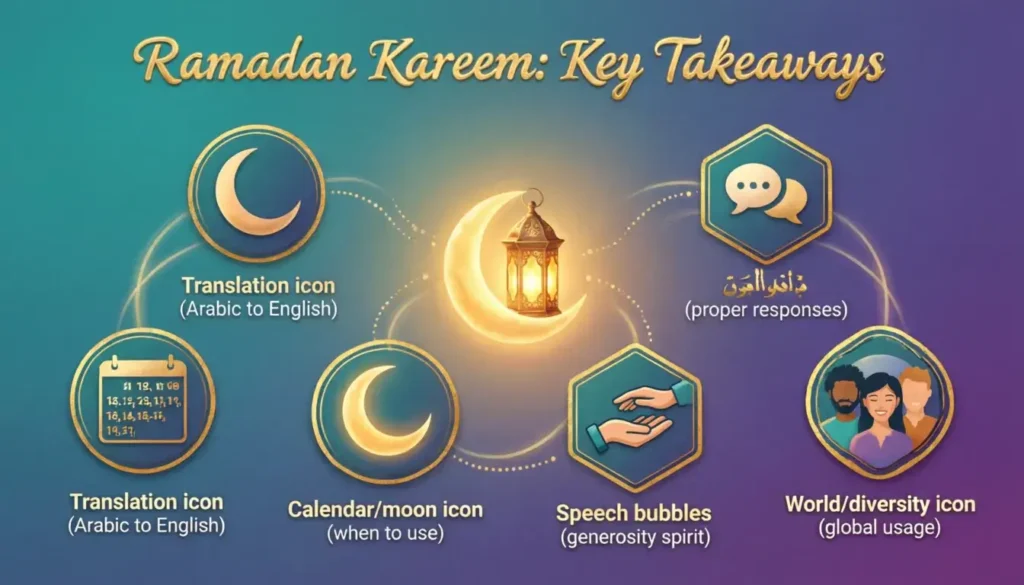
- “Ramadan Kareem” means “Generous Ramadan”
- It’s appropriate for Muslims and non-Muslims to use
- The phrase emphasizes charity, kindness, and spiritual growth
- Both “Ramadan Kareem” and “Ramadan Mubarak” are acceptable
- Actions matter more than words—embody the generosity
Whether you’re Muslim observing Ramadan or a friend showing support, embrace the generous spirit. Give more. Forgive more. Connect more. That’s what “Ramadan Kareem” truly means.
Next time Ramadan arrives, confidently wish your Muslim friends this beautiful greeting. You’ll brighten their day and strengthen your connection. After all, learning about different cultures and expressions—like understanding modern slang or communication styles—brings us all closer together.
Now go spread some generosity. Ramadan Kareem!