What Does an Upside Down Cross Mean? The Complete Guide
What does an upside down cross mean is one of the most misunderstood symbols in modern culture. You’ve probably seen it on a necklace, a tattoo, or in a horror film — and you’re not sure what to think. Is it evil? and is it religious? Is it just fashion?
The confusion is real. People assume the worst. But the full story is far more layered. This symbol has a rich history that dates back nearly 2,000 years — and it doesn’t always mean what Hollywood wants you to believe.
In this guide, you’ll learn every meaning behind the upside down cross: its biblical roots, spiritual significance, pop culture role, and what it says when worn as jewelry or ink. By the end, you’ll know exactly what someone is communicating when they use this symbol.
What Does an Upside Down Cross Mean? The Origin Story
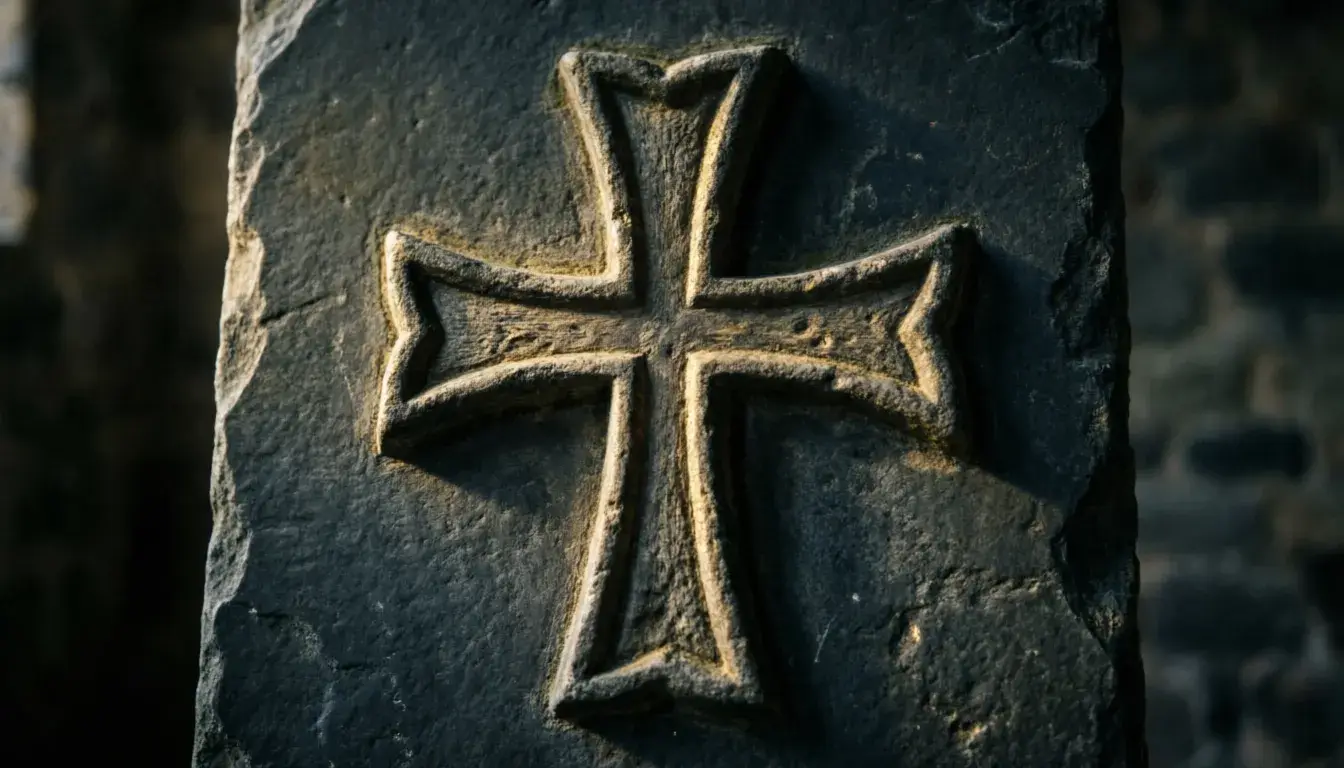
The upside down cross is also called the Cross of Saint Peter. It has a deeply Christian origin. Saint Peter — one of Jesus’s closest apostles — was sentenced to death by crucifixion.
He refused to be crucified in the same position as Jesus. He felt unworthy of that honor. So he requested to be crucified upside down. The Roman authorities granted the request. Peter died on an inverted cross around 64 AD.
That’s where this symbol comes from. It has nothing to do with evil at its historical root. It’s actually a symbol of humility and devotion.
The Cross of Saint Peter in Christianity
The Catholic Church has used the Cross of Saint Peter for centuries. The Pope sits on a throne decorated with this symbol. Vatican coins have featured it. It represents the papacy itself.
So when you see an upside down cross in a church, it’s a sign of faith — not rebellion.
How the Symbol’s Meaning Changed Over Time
The shift happened gradually. Anti-Christian movements adopted the symbol in the 19th and 20th centuries. They flipped its meaning intentionally. They used it to mock Christianity and signal opposition to organized religion.
Then pop culture ran with it. Horror films, heavy metal music, and goth subcultures made it mainstream as a symbol of darkness. Today, many people see it purely through that lens.
What Does an Upside Down Cross Mean in the Bible?
The Bible never directly references the inverted cross as a symbol. However, the story of Saint Peter’s crucifixion comes from church tradition and early Christian writings.
The Gospel of John alludes to Peter’s death: “Someone else will lead you where you do not want to go.” Early church fathers, including Origen and Eusebius, wrote about Peter’s inverted crucifixion as an act of humility.
Is It Considered Blasphemous in Scripture?
No. The Bible doesn’t condemn this symbol. The negative association is cultural — not scriptural. Many devout Christians wear or display the Cross of Saint Peter without any contradiction to their faith.
The context matters enormously. Intent matters. A symbol worn out of reverence for Saint Peter carries a completely different meaning from one worn to shock or offend.
What Christian Scholars Say
Most theologians and Christian scholars recognize the symbol’s dual nature. They acknowledge the saintly origin while also acknowledging its co-option by anti-religious movements. The consensus: context is everything.
The Two Faces of the Inverted Cross: A Quick Comparison
| Context | Meaning | Common Users |
|---|---|---|
| Early Christianity / Catholicism | Humility, devotion, papacy | Popes, Catholic art, church iconography |
| Occultism / Satanism | Anti-Christian rebellion | LaVeyan Satanists, black metal subcultures |
| Horror / Film | Evil, the demonic | Directors, writers, set designers |
| Fashion / Streetwear | Edginess, counter-culture | Young people, artists, designers |
| Tattoo Culture | Personal expression (varies widely) | Tattoo enthusiasts, musicians, creatives |
What Does an Upside Down Cross Mean in Horror Movies?
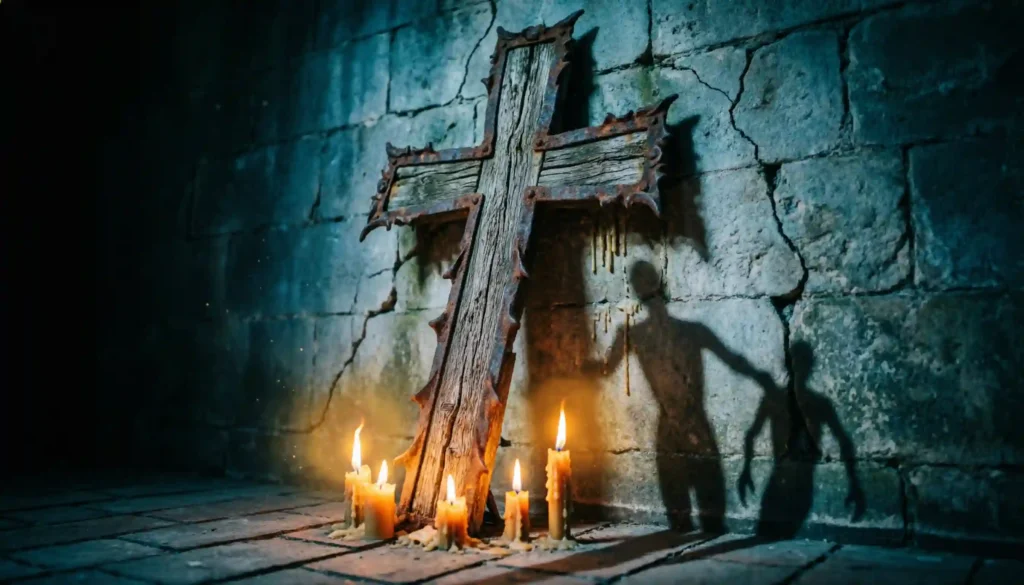
Horror cinema weaponized this symbol brilliantly. Films like The Conjuring, Rosemary’s Baby, and The Exorcist use the inverted cross to signal demonic presence, possession, or evil forces at work.
Directors know the symbol carries instant cultural weight. You see an upside down cross on screen — you feel dread. That’s intentional. It shortcuts audience emotion without a word of dialogue.
Why Horror Films Love This Symbol
The upside down cross visually “breaks” something familiar. A regular cross feels safe and holy. Flip it — suddenly it feels wrong. That visual disruption is powerful storytelling.
It also signals to audiences that they’re watching something deliberately anti-sacred. Horror feeds on violated expectations. The inverted cross delivers that feeling in a single image.
Real-Life Impact of Horror Depictions
Horror movies have done more to shape public perception of this symbol than any religious text. Many people — especially younger generations — only know the inverted cross as a horror trope.
This creates genuine confusion when they encounter it in religious or historical contexts. A lot of online searches for what does an upside down cross mean come directly from people who just watched a scary movie. Just like understanding internet slang — for example, knowing what does JFC mean in online conversations — context completely changes the interpretation.
What Does an Upside Down Cross Mean on a Necklace?
Jewelry is intensely personal. When someone wears an inverted cross necklace, the meaning depends entirely on the individual.
Religious Wear
Some Catholics and Christians wear the Cross of Saint Peter as a statement of faith. It connects them to one of Christianity’s most important figures. It’s an act of reverence, not rebellion.
Counter-Cultural Wear
Many people wear it as a statement against organized religion. They’re not Satanists. They’re simply signaling that they reject traditional Christian authority. It’s a form of symbolic protest.
Fashion Wear
A large portion of people wear it simply because it looks cool. Gothic aesthetics, dark fashion, and alt-culture have made this symbol a staple of certain wardrobes. For these wearers, it’s no different than wearing a skull — edgy, not evil.
Bottom line: Don’t assume intent. Ask. A necklace tells you style, not soul.
What Does an Upside Down Cross Mean as a Tattoo?
Tattoos carry even more personal weight than jewelry. When someone permanently marks their body with an inverted cross, they’re making a deliberate statement. But what statement varies wildly.
Common Tattoo Interpretations
- Tribute to Saint Peter: Some Christians get this tattoo specifically to honor the apostle and his martyrdom.
- Anti-religious sentiment: Others use it to mark their rejection of Christianity or organized faith.
- Aesthetic choice: Many tattoo enthusiasts simply like how it looks paired with other dark or gothic imagery.
- Band or subculture affiliation: Heavy metal fans sometimes get it to align with their musical community.
What to Consider Before Getting This Tattoo
Think about your intended meaning. Think about how others will interpret it. A tattoo is a conversation starter — make sure you’re ready for the conversation it starts. If you work in conservative environments, the inverted cross tattoo may invite assumptions you’ll spend a lot of time correcting.
Upside Down Cross Tattoo: Meanings at a Glance
| Wearer Intent | What Others May Assume | Reality Check |
|---|---|---|
| Honor Saint Peter | Anti-religious or satanic | Origin is deeply Christian |
| Reject religion | Edgy / counter-cultural | Valid personal expression |
| Aesthetic / fashion | Goth or metal affiliation | Often just style choice |
| Satanic affiliation | Satanic affiliation | Rare but exists — context matters |
What Does an Upside Down Cross Mean Spiritually?
Spiritually, this symbol holds multiple energies depending on your belief system. It’s one of the most context-sensitive symbols in the world.
In Christianity
It represents humility, surrender, and the willingness to die for one’s convictions. Saint Peter chose this death freely. That’s profound spiritual courage. The symbol, in this light, is about radical devotion.
In Occult and New Age Traditions
Some occult traditions use the inverted cross to represent the inversion of spiritual order — turning the divine “upside down” to access hidden or forbidden knowledge. It’s used in rituals intended to challenge mainstream spiritual authority.
In Satanism — specifically the LaVeyan tradition — it serves as a rejection of Christian moral frameworks. It’s less about worshipping evil and more about individualism and self-determination.
In Dream Symbolism
People also search: what does an upside down cross mean in a dream? Dream analysts suggest that seeing this symbol in a dream often reflects internal conflict about faith, authority, or identity. It may indicate questioning of beliefs you were raised with. It can also signal a sense of spiritual transformation or upheaval happening beneath the surface.
What Does an Upside Down Cross Mean in Fashion?
Fashion co-opts religious and spiritual symbols constantly. The inverted cross entered mainstream fashion in the 1970s through punk and continued through goth, metal, and streetwear cultures.
Major Fashion Moments
High-fashion designers have used inverted crosses in runway collections. Alexander McQueen, Givenchy, and various streetwear brands have incorporated it. When fashion uses it, the intent is usually provocative aesthetics — not spiritual statement.
Madonna wore a cross-heavy aesthetic for decades. The inversion was always about disruption, not devotion. Similarly, understanding modern slang like what does rizz mean helps decode how youth culture consistently co-opts and repurposes established symbols and language for new self-expression.
Is It Offensive to Wear?
For some Christians, yes — it can feel disrespectful. For others, especially those who know its Petrine origin, it’s a non-issue. The answer depends on the community you’re in. Be aware of your context. Fashion choices carry social weight.
What Does an Upside Down Cross Mean in Ireland?
Ireland is a deeply Catholic nation with a complex relationship with religious symbols. The inverted cross carries specific weight there.
Catholic Tradition in Ireland
In traditional Irish Catholicism, the Cross of Saint Peter is recognized for what it is: a symbol of martyrdom and papal authority. Many older generations would read it through that lens immediately.
Younger Irish Generations
Younger Irish people, particularly post-Celtic Tiger and post-Church scandal generations, have increasingly secular or anti-institutional relationships with Catholicism. For this group, the inverted cross may carry a pointed counter-cultural charge — a deliberate rejection of an institution that defined (and often damaged) Irish society for decades.
So in Ireland, the symbol carries layers of social and political meaning beyond religion. It can be a quiet act of resistance. This is similar to how certain phrases carry layered meanings in digital communication — for instance, knowing what does NP mean online versus in a formal context shows how symbols shift with social setting.
How the Upside Down Cross Is Interpreted Across Cultures
| Culture / Region | Primary Interpretation | Secondary Meaning |
|---|---|---|
| Traditional Catholic Countries (incl. Ireland) | Cross of Saint Peter — faith symbol | Anti-church protest (younger generations) |
| United States (mainstream) | Horror / evil / Satanic | Fashion / edgy aesthetic |
| Heavy Metal Subculture | Anti-Christian, rebellion | Genre identity marker |
| Goth / Dark Aesthetics | Dark beauty / mysticism | Counter-culture identity |
| Vatican / Papal Context | Petrine symbol / papacy | Humility and martyrdom |
Understanding Symbols in the Age of Internet Culture
Symbols shift meaning constantly. The internet accelerates this. What starts with deep historical weight gets memed, trended, and reposted until the original meaning blurs.
This happens with language too. Knowing what does WTW mean, or what does OFC mean, or what does SMD mean in a text requires you to know the platform, relationship, and tone — because the same letters mean different things in different places. The upside down cross works exactly the same way.
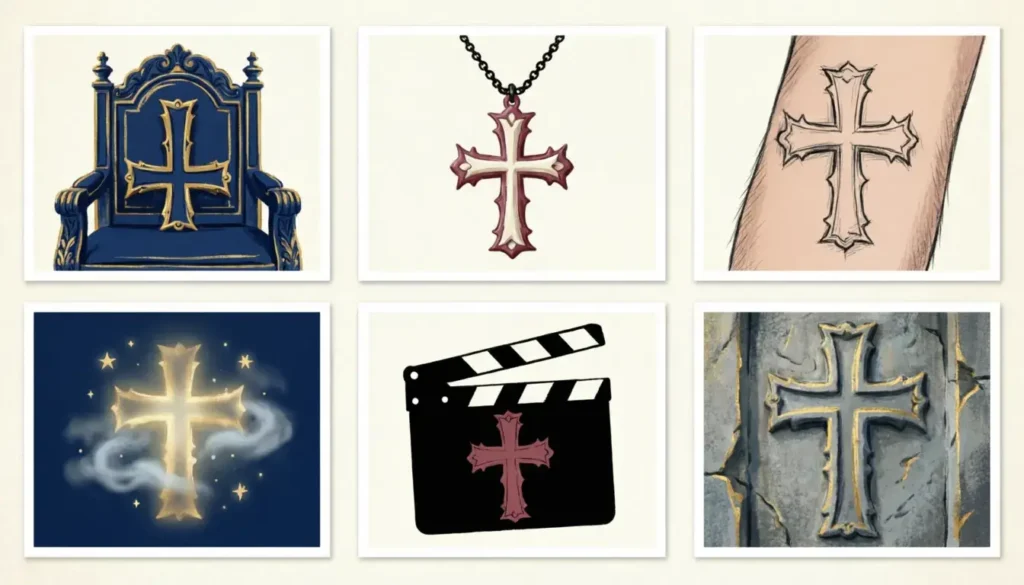
Symbols don’t have fixed meanings. They have histories, communities, and contexts. The inverted cross is a perfect case study in how one image can be simultaneously sacred and subversive, depending on who’s using it and why.
Other internet expressions carry this same layered quality — even something like what does KMS mean online is misread constantly because people don’t account for tone and platform. Or take what does FYM mean and what does GMFU mean — both phrases that carry strong connotations that shift based on who says them and where.
The lesson: always investigate before you interpret. Assumption is how misunderstanding spreads.
Frequently Asked Questions
What does an upside down cross mean in general?
It has two main meanings. The first is the Cross of Saint Peter — a Christian symbol of humility from the 1st century. The second is a modern anti-Christian or counter-cultural symbol used in occult communities, horror media, and fashion. Context determines which meaning applies.
What does an upside down cross mean in the Bible?
The Bible doesn’t directly address this symbol. However, Saint Peter’s inverted crucifixion is part of early Christian tradition. The symbol is tied to Peter’s humility before Christ. Many Christian scholars view it as a legitimate expression of faith when used in that spirit.
What does an upside down cross mean in a dream?
Dream analysts associate it with inner conflict about faith or authority. It may represent questioning of deeply held beliefs, spiritual transformation, or tension between your upbringing and your current worldview. It’s rarely interpreted as a negative omen without other disturbing dream elements present.
Is wearing an upside down cross disrespectful to Christians?
It depends on the Christian and the context. Many Catholics recognize the Petrine origin and aren’t offended. Others associate it with anti-Christian sentiment and find it offensive. If you’re in a religious community, it’s worth being aware of how your symbol will be read by those around you.
What does an upside down cross mean in fashion and streetwear?
In fashion, it’s primarily an edgy aesthetic choice. Designers use it to signal rebellion, darkness, or counter-culture identity. Most wearers aren’t making a spiritual statement — they’re making a style one. The symbol has been absorbed into fashion as a visual shorthand for “alternative.”
What does an upside down cross tattoo mean?
It varies by person. Some get it to honor Saint Peter. Others use it to signal rejection of religion. Many choose it purely for its bold, graphic look in dark or gothic tattoo styles. Always consider how it may be perceived professionally and socially before committing to it permanently.
Conclusion: It’s All About Context
So — what does an upside down cross mean? It means different things to different people. That’s the honest answer. It’s a symbol with a 2,000-year-old Christian origin that has been reclaimed, weaponized, fashionized, and memed into dozens of new meanings.
Here are the key takeaways:
- Historically, it’s the Cross of Saint Peter — a symbol of humility and devotion.
- In pop culture, it signals anti-Christian rebellion or evil — thanks largely to horror films.
- In fashion, it’s an edgy aesthetic with no deep spiritual intent for most wearers.
- In dreams, it often reflects internal spiritual conflict or belief questioning.
- Always read context first — the same symbol can be sacred or subversive.
Next time you see an inverted cross, don’t jump to conclusions. Ask yourself: who is using it, where, and why? That’s where the real meaning lives. If you found this helpful, share it with someone who’s been wondering the same thing.