

What Does Contingent Mean? The Complete Guide for Buyers, Sellers & Beyond
What does contingent mean — it’s one of the most Googled questions in real estate, and for good reason. You spot your dream home on Zillow or Realtor.com. It says “contingent.” Your heart sinks. But wait — does that mean it’s gone? Not necessarily. Understanding this word can save you from walking away too early or making a costly mistake. This guide breaks it all down in plain English — no confusing jargon, no fluff.
Whether you’re a first-time buyer, a curious seller, or someone who keeps seeing the term pop up on listings, you’re in the right place. By the end, you’ll know exactly what contingent means, how it works in real estate, when deals fall through, and how to use it to your advantage.
What Does Contingent Mean? The Simple Definition
At its core, contingent means “dependent on something else happening first.” Think of it like a condition. If the condition is met, the deal moves forward. If it isn’t, the deal can be canceled — usually without penalty.
The word comes from Latin: contingere, meaning “to touch” or “to happen.” In everyday life, you use it all the time. “I’ll come to the party, contingent on finishing work early.” Same logic applies in contracts and real estate.
Contingent vs. Pending: Key Difference
Many people mix these up. Here’s the quick breakdown:
| Status | What It Means | Can You Still Make an Offer? |
|---|---|---|
| Contingent | Under contract, but conditions must be met | Sometimes (as a backup offer) |
| Pending | All conditions met, closing soon | Rarely |
| Active | Fully available for offers | Yes |
The bottom line? Contingent listings can still fall through. Pending ones almost never do.
What Does Contingent Mean in Real Estate?
In real estate, contingent means a buyer and seller have signed a purchase agreement — but the sale isn’t final yet. Specific conditions must be satisfied before closing. If those conditions aren’t met, either party can walk away.
This protects both sides. Buyers get protection if something goes wrong with financing or inspections. Sellers keep the home off the market while the buyer gets their ducks in a row.
The Most Common Real Estate Contingencies
- Inspection Contingency: The buyer can cancel or renegotiate if the home inspection reveals major problems.
- Financing Contingency: If the buyer’s mortgage falls through, they can exit without losing their deposit.
- Appraisal Contingency: If the home appraises lower than the offer price, the buyer can renegotiate or cancel.
- Home Sale Contingency: The buyer needs to sell their current home first before purchasing the new one.
- Title Contingency: The property’s title must come back clean — no liens, disputes, or legal issues.
Each contingency has a deadline. Miss it, and you could lose your earnest money deposit or the entire deal.
What Does Contingent Mean on Zillow and Realtor.com?
Seeing “contingent” on Zillow or Realtor.com doesn’t mean the home is sold. It means a buyer made an offer and the seller accepted — conditionally. The deal is alive, but not sealed.
What Does Contingent Mean on Zillow Specifically?
Zillow uses “contingent” when a property is under contract with outstanding conditions. It usually breaks into two sub-statuses:
| Zillow Status | What It Indicates | Backup Offers Allowed? |
|---|---|---|
| Contingent – Continue to Show | Seller accepts backup offers | Yes |
| Contingent – No Show | Seller not accepting more showings | No |
| Pending | Contingencies resolved, closing in progress | Rarely |
What Does Contingent Mean on Realtor.com?
Realtor.com pulls data directly from MLS systems. When you see “contingent” on Realtor.com, the listing agent has updated the MLS status after an accepted offer. It’s generally more accurate and up-to-date than Zillow. Still, it’s worth calling the agent directly to ask about backup offer policies.
Just like understanding slang terms — for instance, if you’ve ever wondered what does NP mean — knowing the context behind a word changes everything.
What Does Contingent Mean on a House for Sale? A Step-by-Step Breakdown
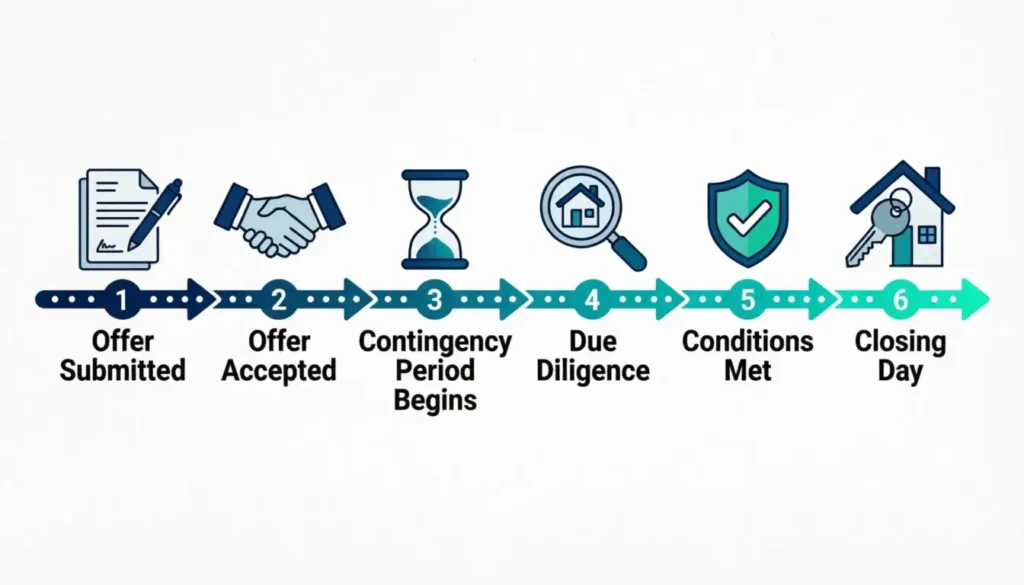
Here’s exactly what happens when a house goes contingent:
- Buyer submits an offer — Often with contingency clauses attached.
- Seller accepts the offer — The home’s status changes to “contingent.”
- Contingency period begins — Usually 7–30 days depending on the clause.
- Buyer completes due diligence — Inspections, appraisals, loan approvals.
- Conditions are met or waived — Deal moves to “pending.”
- Closing day arrives — Keys change hands.
If conditions aren’t met during step 4, the deal can collapse. The home goes back to “active” on the market — and the next buyer steps in.
How Long Does a Contingent Sale Last?
Most contingency periods last between 7 and 45 days. Inspection contingencies are typically the fastest — around 7–14 days. Financing contingencies can run 21–30 days. Home sale contingencies are the longest and most uncertain, sometimes lasting 30–60 days.
Sometimes conversations get confusing when you don’t know what terms mean — kind of like seeing what does JFC mean pop up in a text and not knowing the context.
What Does Contingent Mean When Buying a House?
If you’re the buyer, contingencies are your safety net. They give you the legal right to cancel the deal if something goes wrong — without losing your earnest money deposit.
Should You Waive Contingencies to Win a Bid?
In competitive markets, some buyers waive contingencies to make their offer more attractive. This is risky. Really risky. Here’s a quick comparison:
| Approach | Pros | Cons |
|---|---|---|
| Keep contingencies | Protected from bad inspections, failed loans | Offer may lose to a cleaner bid |
| Waive inspection | More competitive offer | Risk inheriting unknown repairs |
| Waive financing | Very attractive to sellers | Huge risk if loan falls through |
| Waive all contingencies | Maximum appeal in hot markets | Maximum personal financial risk |
The decision depends on your risk tolerance and the market. Talk to your real estate agent before waiving anything. And if you ever feel like the whole process is making you want to shout something dramatic, you might relate to what does SMD mean — but keep it professional!
What Does Contingent Mean When Selling a House?
If you’re the seller, a contingent offer means you have an accepted deal — but you’re not fully in the clear. You’re betting on the buyer following through.
Can You Accept Other Offers While Contingent?
Yes, in many cases. A seller can keep the home on the market and accept backup offers. This is especially common when a home sale contingency is involved. If the first buyer’s deal collapses, you move right to the next offer.
Some contracts include a kick-out clause. This lets you “kick out” the first buyer if a better offer comes along — usually giving the first buyer 24–72 hours to remove their contingencies or step aside.
It can feel like a waiting game — similar to waiting to understand what someone means online, like when you’re puzzling over what does WTW mean in a message.
What Does Contingent Mean in Life Insurance?
Contingent doesn’t just apply to real estate. In life insurance, it refers to a contingent beneficiary. This is the person who receives the death benefit if the primary beneficiary can’t. Think of them as the backup.
For example: You name your spouse as primary beneficiary and your child as contingent. If your spouse passes before you, the child collects the benefit.
Contingent vs. Primary Beneficiary
- Primary Beneficiary: First in line to receive the payout.
- Contingent Beneficiary: Receives the payout only if the primary cannot.
Always keep your beneficiary designations updated. Life changes. Policies shouldn’t be left on autopilot.
If you’re still wrapping your head around unfamiliar terms in different contexts, you might also enjoy learning what does OFC mean — a great example of how context shapes meaning.
What Does Contingent Mean in Other Contexts?
The word “contingent” shows up in many areas beyond real estate and insurance. Here’s a quick overview:
- Legal contracts: A contingent fee means a lawyer only gets paid if you win.
- Business: Contingent workers are temporary or freelance staff — hired based on need.
- Finance: Contingent liabilities are potential debts that depend on a future event.
- Philosophy: Something is contingent if it could have been otherwise — not necessarily true or false.
The common thread? Contingent always means dependent on something else. It’s never absolute. There’s always a condition attached.
Language is layered. Just like figuring out what does KMS mean requires knowing the context, so does understanding “contingent” in the right setting.
Tips for Buyers and Sellers Navigating Contingent Deals
For Buyers
- Always include an inspection contingency on older homes. Hidden problems are expensive.
- Get pre-approved — not just pre-qualified — before making an offer. It strengthens your position.
- Set realistic timelines. Rushing contingencies leads to missed problems.
- Keep communication open with your agent. Deadlines matter.
For Sellers
- Don’t stop marketing just because you accepted a contingent offer.
- Consider adding a kick-out clause if the buyer’s contingency timeline is long.
- Respond quickly to inspection requests. Delays frustrate buyers.
- Work with an experienced agent who knows how to manage contingency negotiations.
The more you understand real estate terms, the better decisions you make. It’s like having a decoder ring — once you know the language, everything clicks. And speaking of decoding, you might get a kick out of reading about what does rizz mean while you’re at it.
Real-World Example: How a Contingent Deal Plays Out
Let’s say Sarah finds a house listed at $400,000. She offers $410,000 with two contingencies: an inspection and a financing contingency. The seller accepts. The listing goes contingent.
During the inspection, the inspector finds a cracked foundation. Sarah requests a $20,000 price reduction. The seller agrees. The financing contingency clears when her lender approves the loan. Both conditions are met. The status changes to “pending.” Two weeks later, Sarah has her keys.
Now imagine the lender had declined her loan. Sarah could have walked away — earnest money intact — because of the financing contingency. That’s why these clauses matter.
Understanding the behind-the-scenes of a deal can feel like decoding a whole new language, much like figuring out what does FYM mean when someone sends you a confusing text.
How to Make an Offer on a Contingent Property

You can still make an offer on a contingent home. Here’s how to approach it strategically:
- Ask the listing agent if the seller is accepting backup offers.
- Submit a strong backup offer — close to or at asking price.
- Include minimal contingencies if possible, to look more attractive.
- Be patient — deals fall apart. Yours could be next in line.
- Stay in contact — let the agent know you’re serious and ready.
About 5–10% of contingent deals collapse before closing. So never count yourself out entirely. And hey, if frustration is building, you might find some dark humor in what does GMFU mean — just keep it off the negotiation table.
Frequently Asked Questions
What does contingent mean on a house for sale?
It means a buyer has made an offer and the seller accepted it — but with conditions. The sale isn’t final. If those conditions (like inspection or financing) aren’t met within the timeframe, the deal can be canceled and the home returns to the market.
What does contingent mean on Zillow vs. Realtor.com?
Both platforms show “contingent” when a home is under contract with unresolved conditions. Realtor.com pulls directly from MLS feeds, making it slightly more accurate. Zillow may show sub-statuses like “Continue to Show” or “No Show” to clarify whether backup offers are welcome.
Can I still buy a contingent home?
Yes. You can submit a backup offer on many contingent homes. If the current deal falls through, your offer moves to the front of the line. Always ask the listing agent whether the seller is accepting backup offers before investing time in the process.
What does contingent mean in real estate vs. pending?
Contingent means conditions still need to be met. Pending means all conditions are resolved and the deal is moving to closing. A contingent home can still fall through. A pending home almost always closes. The difference is significant for buyers watching a listing.
What does contingent mean in life insurance?
In life insurance, a contingent beneficiary is the backup person who receives the death benefit if the primary beneficiary is unable to collect. Always name both a primary and contingent beneficiary. It prevents your payout from going through probate court.
How long does a contingent status last on a house?
It varies. Inspection contingencies typically last 7–14 days. Financing contingencies run 21–30 days. Home sale contingencies can last 30–60 days. The total contingent period depends on how many clauses are in the contract and how fast both parties move.
Conclusion: What You Now Know About Contingent
Understanding what does contingent mean gives you a real edge — whether you’re buying, selling, or just curious. You now know it’s not a dead end. It’s a condition-based status that can shift. Deals fall through. Backup offers succeed. Buyers use contingencies as protection. Sellers use them as negotiating tools.
Here are the key takeaways:
- Contingent means a deal exists but conditions must be met first.
- It appears on Zillow, Realtor.com, and MLS listings when a home is under contract.
- Common contingencies include inspection, financing, appraisal, and home sale clauses.
- You can still make a backup offer on a contingent home.
- In life insurance, contingent refers to a secondary beneficiary.
Your next step? If you’re house hunting, don’t skip contingent listings. Call the agent. Ask about backup offers. Stay proactive. The right home might be one fallen deal away.